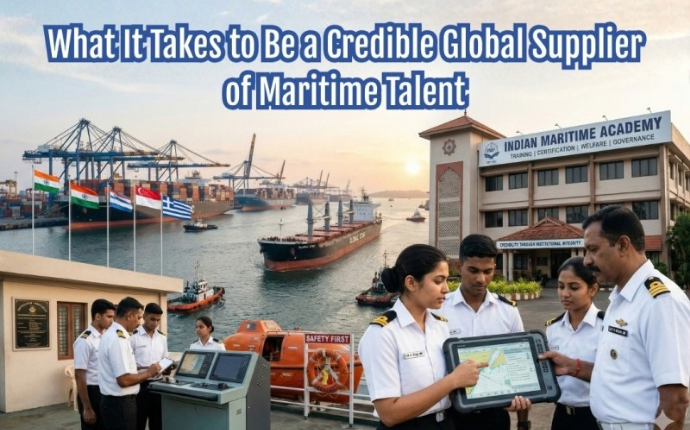
Nations participate in the global maritime economy in different ways. Some provide tonnage. Some provide infrastructure. Some provide finance. Others provide specialised services that support the movement of trade across oceans. A smaller number become known for something more enduring and more structurally influential. They become trusted sources of human capability.
To be recognised as a credible global supplier of maritime talent is not simply to produce large numbers of seafarers. It is to sustain a reputation for professional competence, reliability, adaptability and institutional integrity across decades of international engagement. It is to be seen not merely as a labour source, but as a dependable contributor to the operational stability of global shipping itself.
This distinction matters because maritime labour markets do not function purely on the basis of availability. They function on the basis of trust. Shipowners, operators and international maritime institutions rely on the consistent performance of professionals whose work occurs far from the environments in which oversight is immediate. Decisions about recruitment therefore depend not only on skill, but on confidence that skill is supported by systems that ensure continuity of standards, protection of welfare and alignment with international norms.
Credibility, in this context, is institutional rather than individual. Individual competence is essential, but it is not sufficient. What sustains long-term global confidence is the assurance that competence is produced, verified and maintained through structures that remain stable across time. Training must be rigorous. Certification must be recognised. governance must be reliable. Welfare must be protected. Administrative systems must function with clarity across jurisdictions. When these elements operate in coherence, maritime talent becomes not just employable, but trusted.
India’s maritime workforce already occupies a significant place within global shipping. Indian seafarers serve across fleets that operate under diverse flags and within varied regulatory environments. Their presence reflects long-standing investment in maritime education, technical training and professional development. Yet scale of participation alone does not define long-term position. The defining question is whether participation translates into sustained institutional credibility.
Credibility is cumulative. It is formed gradually through consistent performance observed over time. It is reinforced when professional standards remain dependable across changing operational conditions. It is strengthened when institutional frameworks demonstrate reliability in moments of strain. It is deepened when international partners recognise not only the quality of individual professionals, but the integrity of the system that produces them.
For a nation seeking to strengthen its position as a global supplier of maritime talent, several structural conditions must converge. Training institutions must remain aligned with evolving international standards not only formally, but substantively. Professional certification must be transparent, consistent and widely recognised. Administrative processes must support mobility without compromising accountability. Welfare protections must remain continuous even when employment occurs beyond national jurisdiction. Governance must demonstrate both authority and responsiveness.
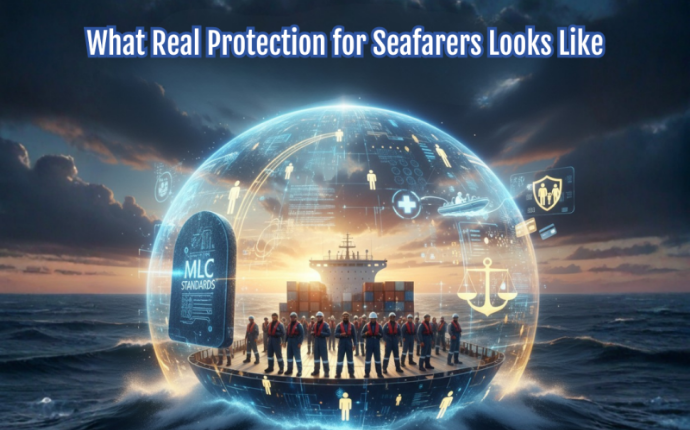
These conditions are interdependent. Training that produces competence must be matched by certification that confirms it. Certification must be supported by governance that enforces standards. Governance must operate within administrative systems capable of managing complex international interaction. Welfare frameworks must protect individuals whose professional credibility is inseparable from their security. The strength of maritime talent therefore reflects the coherence of an entire institutional ecosystem.
Globally, countries that have sustained long-term recognition as providers of maritime talent have typically developed precisely such coherence. Their professional training systems evolve alongside technological change. Their regulatory frameworks maintain alignment with international conventions while adapting to emerging realities. Their administrative systems facilitate engagement across multiple jurisdictions. Their welfare structures reinforce confidence that professional participation does not entail vulnerability.
India’s maritime system continues to evolve within this global landscape. Its educational institutions produce large numbers of qualified professionals. Its regulatory structures align with established international frameworks. Its workforce demonstrates adaptability across diverse operational environments. These elements together form a foundation upon which credibility can deepen over time.
Yet global maritime labour markets are not static. Technological transformation, environmental regulation and evolving operational models are reshaping the competencies required of maritime professionals. Digital navigation systems, automation, complex safety protocols and sustainability standards are redefining the nature of maritime expertise. Nations that seek to remain credible suppliers of talent must ensure that their training and certification systems evolve at a pace that reflects these developments.
Credibility therefore depends not only on maintaining existing standards but on anticipating future ones. Training institutions must prepare professionals for operational environments that are themselves evolving. Certification systems must remain responsive to changing competency frameworks. Governance must ensure that adaptation occurs without fragmentation of standards. Institutional foresight becomes an essential component of long-term credibility.
Another dimension of credibility lies in continuity of professional pathways. Maritime careers often span decades, with individuals progressing through stages of increasing responsibility. Systems that support such progression create professional depth that reinforces global confidence. Experience accumulated across time contributes to institutional memory and technical mastery that cannot be produced rapidly. A workforce that develops through structured progression becomes a stabilising presence within global operations.
Continuity, however, depends on environments that sustain long-term engagement. Welfare protections, career stability and institutional recognition all influence whether professionals remain within maritime careers across extended periods. Nations that provide conditions supporting sustained professional development strengthen not only workforce participation but global perception of reliability.
The global dimension of maritime labour also requires alignment between domestic institutional frameworks and international operational realities. Professionals frequently serve under regulatory systems different from those of their home country. Ensuring that certification, welfare and professional recognition remain coherent across these contexts requires structured cooperation between national institutions and global maritime governance mechanisms.
India’s maritime engagement already operates within such interconnected frameworks. Indian professionals work across diverse jurisdictions where standards of safety, labour protection and operational practice must remain mutually intelligible. Sustaining credibility requires that domestic institutional systems remain not only compliant with international conventions but actively aligned with evolving global expectations.
The role of governance in this alignment is central. Regulatory authorities must ensure that certification remains rigorous and transparent. Administrative systems must facilitate recognition across jurisdictions. Institutional communication must remain clear and responsive. Governance does not merely regulate maritime talent. It signals to the world that the system through which talent is produced operates with integrity.
The Indian Maritime Federation, through its engagement with industry, workforce and policy environments, recognises that global credibility is shaped as much by institutional coherence as by professional competence. Dialogue that supports alignment between training, certification, welfare and governance contributes directly to strengthening India’s position within global maritime labour markets.
Credibility also carries strategic implications beyond workforce participation itself. Nations recognised as reliable suppliers of maritime talent often gain influence within broader maritime governance structures. Their perspectives shape discussions on labour standards, operational practice and institutional development. Participation in global maritime systems becomes not only economic but institutional.
This influence arises because trusted participation generates recognition. When maritime professionals from a given national system consistently contribute to operational stability, the system that produces them gains standing. Credibility becomes a form of institutional capital that extends beyond labour markets into the broader architecture of maritime governance.
India’s long-term maritime strategy increasingly intersects with this dimension of global engagement. As the country seeks to strengthen its presence across shipping, infrastructure and maritime services, the credibility of its workforce becomes a foundational asset. Human capability, when supported by coherent institutional frameworks, contributes not only to employment but to national maritime influence.
Building and sustaining such credibility is not a one-time achievement. It requires continuous institutional attention. Training systems must remain adaptive. Certification must remain consistent. Welfare must remain secure. Governance must remain reliable. Administrative systems must remain efficient. Each component contributes to the cumulative perception of trust that defines global reputation.
Maritime labour markets, perhaps more than most sectors, operate through long memory. Professional performance observed over decades shapes enduring perception. Nations that maintain consistent standards across time become embedded within the operational fabric of global shipping. Their professionals are not simply hired. They are relied upon.
India stands within reach of this deeper form of recognition. Its maritime workforce already demonstrates scale and capability. The ongoing task is to ensure that the institutional environment supporting that workforce continues to evolve with coherence, foresight and integrity. Credibility, once established firmly, becomes self-reinforcing. Trust attracts engagement. Engagement strengthens reputation. Reputation expands influence.
To be a credible global supplier of maritime talent is therefore to sustain more than professional competence. It is to sustain an entire system that produces competence reliably across time, protects those who carry it and aligns continuously with the evolving standards of global maritime life.
In the long history of maritime economies, nations that have achieved enduring presence have often done so not only through ships or trade, but through people whose skill and reliability became recognised across oceans. Human capability, supported by institutional integrity, becomes one of the most portable and most enduring forms of maritime strength.
As India continues to shape its maritime future, the credibility of its workforce will remain one of its most powerful global signatures. It represents not only participation in maritime activity, but contribution to the stability of the global system itself. And that is the true measure of a nation recognised not merely as a source of labour, but as a trusted partner in the shared enterprise of global shipping.