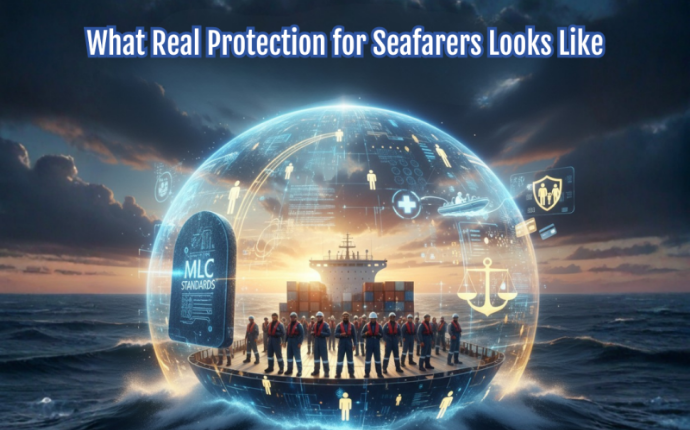
Maritime labour has always occupied a distinctive place within the global economy. It is a profession defined not only by technical skill and discipline, but by distance, exposure and endurance. Seafarers work within environments where physical separation from institutional support is an inherent condition of employment, not an occasional circumstance. Their professional lives unfold across jurisdictions, under shifting operational realities, and within systems that must function reliably even when direct oversight is not immediately present. For this reason, the concept of protection in maritime labour has always carried deeper meaning than simple compliance. It is not merely about the existence of standards, but about the lived assurance that those standards translate into real security under all conditions.
International maritime governance has long recognised this distinction. The Maritime Labour Convention represents one of the most significant efforts to codify the rights, protections and welfare expectations of seafarers within a unified global framework. It establishes baseline standards that transcend national boundaries and define what responsible maritime employment must guarantee. Its provisions reflect collective recognition that seafarers require structured protection not only because of the nature of their work, but because of the inherent vulnerability that distance and isolation can produce. The Convention, in this sense, represents a milestone in institutional commitment to maritime labour welfare.
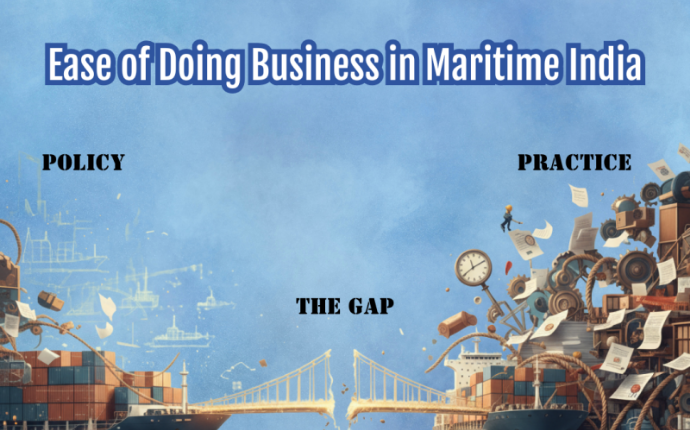
Yet the existence of comprehensive standards, however robust, does not fully define the experience of protection. Standards describe obligations. Protection describes outcomes. Between the two lies the operational reality through which commitments are translated into lived assurance. It is within this space—between definition and delivery—that the distinction between compliance and protection becomes most meaningful. Compliance confirms that requirements have been established and acknowledged. Protection confirms that those requirements function effectively when circumstances demand their activation.
India’s maritime workforce operates within this global framework while also engaging with domestic institutional structures that support implementation. The scale and reach of Indian seafarers make this interaction particularly significant. They serve in diverse operational contexts, across multiple regulatory environments, and often far from the administrative systems that oversee their employment conditions. For them, protection cannot be experienced as a theoretical construct. It must exist as a continuous presence that remains dependable regardless of location, employer or circumstance. The credibility of maritime labour protection is therefore measured not only by adherence to international standards but by the consistency with which those standards translate into practical support.
Over time, sectors that rely on complex regulatory frameworks often develop a natural tendency to equate compliance with sufficiency. When documentation is complete, procedures are followed and certification requirements are met, the system appears to be functioning as intended. Such confirmation is necessary and valuable. It demonstrates institutional alignment with established norms and reinforces accountability across the sector. Yet compliance, by its nature, is primarily confirmatory. It verifies that structures exist and that obligations have been formally recognised. Protection, by contrast, is experiential. It is defined by what occurs when an individual encounters vulnerability and requires assistance that is immediate, reliable and effective.
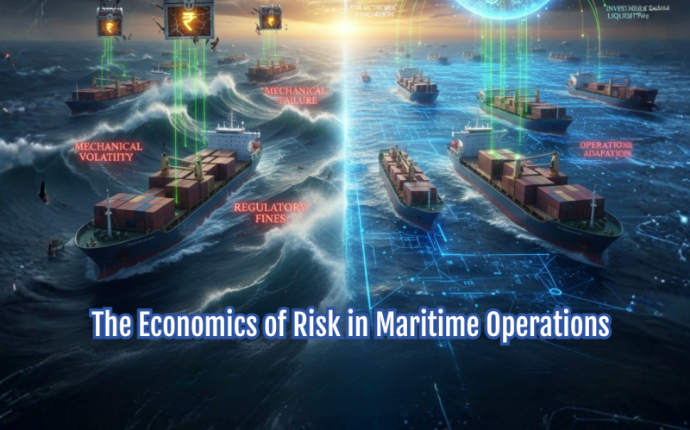
This experiential dimension is particularly pronounced in maritime labour because adverse events often unfold in environments where procedural complexity can carry tangible consequences. A seafarer facing a sudden health crisis requires not merely the assurance that medical coverage exists, but the certainty that treatment can be accessed without delay. A disruption in wages requires not simply acknowledgment of entitlement, but timely restoration of financial stability. Situations of abandonment or contractual dispute require not only recognition of rights, but mechanisms capable of delivering resolution within timeframes that preserve dignity and security. In each of these situations, protection is not an abstract principle. It is an operational reality measured in responsiveness.
The difference between compliance and protection therefore lies not in intent but in structure. Compliance frameworks define responsibility. Protection frameworks ensure that responsibility can be fulfilled under conditions of uncertainty. Where systems rely heavily on procedural verification before response is activated, the pathway from obligation to outcome may lengthen even when responsibility is clearly established. Where systems are designed to deliver assistance through pre-structured mechanisms that function automatically under defined conditions, response becomes less dependent on sequential administrative action and more dependent on structural readiness.
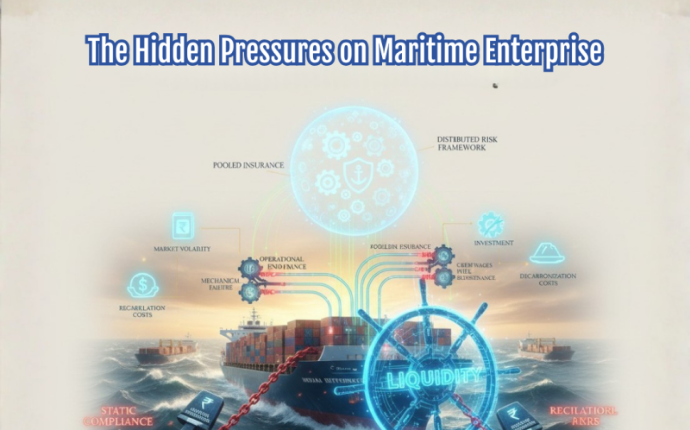
Globally, mature maritime welfare systems increasingly reflect this understanding. They recognise that defining rights is only the first stage of ensuring protection. The second stage lies in designing institutional arrangements that make those rights continuously actionable. This often involves aligning financial, administrative and regulatory mechanisms so that support flows through coordinated pathways rather than through fragmented processes that must be navigated during moments of vulnerability. Such alignment does not alter the legal framework of protection. It strengthens its practical expression.
India’s maritime sector is situated within an environment where such alignment carries growing importance. The expansion of maritime employment, the diversity of operational contexts and the increasing complexity of administrative coordination all contribute to a landscape in which welfare systems must function with heightened consistency. The objective is not to redefine the standards that govern protection, but to ensure that the structures through which those standards operate remain proportionate to the scale and complexity of the environment they serve.
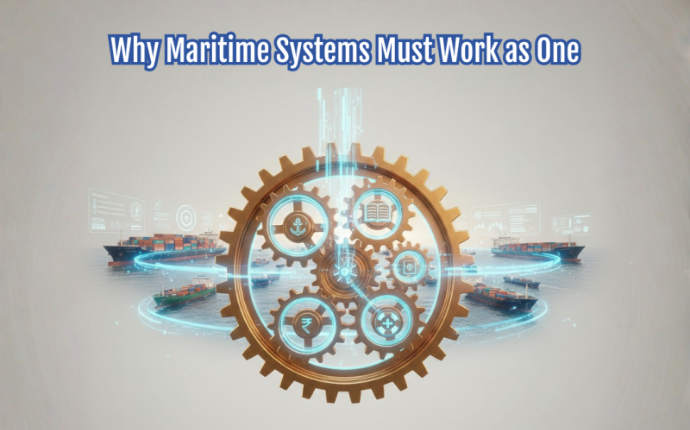
This perspective invites a shift in how protection is understood institutionally. Rather than viewing welfare primarily as a set of obligations to be fulfilled when invoked, it encourages viewing welfare as an integrated system that remains continuously prepared to respond. Preparedness, in this sense, becomes a defining feature of protection. It reflects the ability of institutions to translate defined rights into predictable outcomes regardless of where or when circumstances arise. Such preparedness is not achieved through procedural expansion alone. It is achieved through structural coherence—through systems designed to deliver support without requiring reconstruction each time assistance is needed.
The lived experience of seafarers and their families provides the most direct insight into how protection is perceived. For those whose professional lives unfold across distant waters, assurance is meaningful only when it is dependable under all conditions. The presence of comprehensive regulations offers confidence, but the experience of support offers trust. Trust develops when assistance arrives without uncertainty, when communication remains clear even under pressure and when institutional coordination functions seamlessly despite geographical separation. These experiences shape how protection is understood far more than the presence of formal guarantees alone.
Within the maritime community, awareness of this distinction has been gradually deepening. Stakeholders across regulatory, operational and welfare domains increasingly recognise that protection must be evaluated not solely through compliance metrics but through response capability. The question is not whether obligations are defined, but how reliably they can be fulfilled when circumstances become unpredictable. This shift in perspective reflects the natural maturation of systems that have grown sufficiently complex to require structural integration rather than procedural layering alone.
The Indian Maritime Federation engages with this evolving understanding through its ongoing dialogue with institutions across the maritime ecosystem. Observations drawn from sectoral experience indicate that the strength of labour protection ultimately depends on how effectively systems translate regulatory commitment into operational readiness. Supporting this translation involves fostering coherence among the financial, administrative and regulatory mechanisms that collectively sustain welfare. It involves recognising that protection becomes most meaningful when it functions as a continuous institutional capability rather than an episodic response.
As India’s maritime presence continues to expand within global networks, the reliability of labour protection will remain central to the sector’s credibility. The international maritime community observes not only the standards a nation adopts but the consistency with which those standards produce lived assurance for those who serve under them. Protection that functions predictably across varied circumstances reinforces confidence in the integrity of the system itself. It signals that institutional commitment extends beyond compliance into the realm of sustained operational capability.
In the broader trajectory of maritime governance, the movement beyond compliance toward experiential protection represents a natural progression rather than a conceptual shift. It reflects recognition that defining rights is a foundational achievement, but ensuring their consistent realisation is an ongoing institutional responsibility. As maritime labour continues to operate across vast and unpredictable environments, the measure of protection will remain rooted in its reliability under conditions that test the system’s capacity to respond.
The strength of maritime labour protection, therefore, lies not solely in the comprehensiveness of its legal framework but in the quiet certainty that assistance will be present whenever it is required. Within that certainty resides the true meaning of protection—a system that does not merely define welfare but delivers it, steadily and without interruption, wherever the sea carries those whose work sustains the movement of the world.