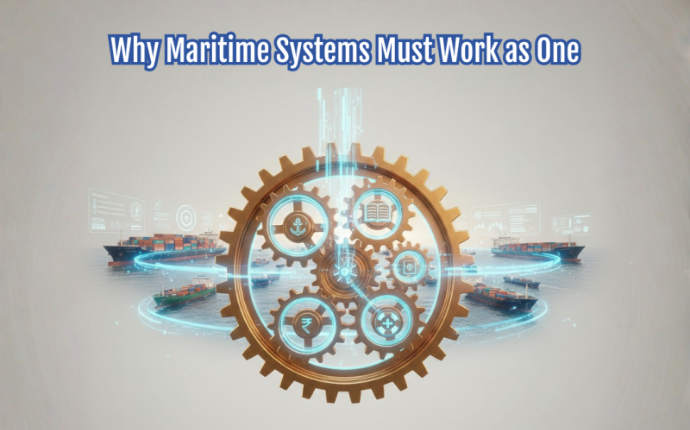
Maritime activity has always been defined by movement across boundaries. Ships travel between ports that belong to different jurisdictions. Crews serve under contractual arrangements shaped by multiple legal systems. Cargo passes through layers of documentation, inspection and verification before reaching its destination. Even within a single voyage, responsibility is distributed across numerous institutions—regulators, operators, insurers, financial intermediaries and welfare mechanisms—each functioning according to its own mandate. This distributed character has long been an inherent feature of maritime life. It reflects the global nature of the sector and the diversity of roles required to sustain it.
For much of maritime history, this distribution of responsibility functioned effectively because the scale of activity allowed individual components of the system to operate with relative independence. Each institution managed its defined domain. Interaction occurred when necessary, often through sequential processes that ensured oversight remained intact at each stage. The system, though composed of separate parts, moved forward through coordinated progression. Fragmentation did not impede function because the pace and volume of activity allowed time for coordination to unfold gradually.
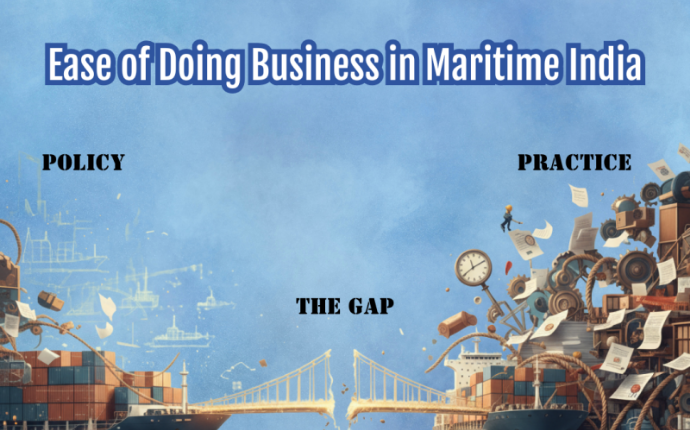
As maritime sectors expand in scale and complexity, however, the operational environment begins to change in ways that place greater emphasis on the relationships among these separate components. The volume of transactions increases, the speed of movement accelerates and the interdependence of institutional functions becomes more pronounced. What was once manageable through sequential coordination begins to require simultaneous alignment. In such an environment, fragmentation is no longer merely an organisational characteristic. It becomes a structural condition that influences how efficiently the system operates as a whole.
India’s maritime ecosystem reflects this transition with increasing clarity. The sector encompasses a wide array of institutional domains, each essential in its own right. Regulatory bodies oversee safety and certification. Training institutions prepare maritime professionals for global deployment. Financial mechanisms provide assurance and manage exposure. Welfare systems support seafarers across diverse operational contexts. Administrative processes manage documentation, verification and compliance across multiple layers of engagement. Each component performs its function diligently. Yet as activity expands, the connections among these components become as significant as the functions themselves.
Fragmentation, in this context, does not imply inefficiency or inadequacy. It reflects the historical development of specialised institutions designed to address distinct aspects of maritime activity. Specialisation has long been a source of strength, allowing expertise to develop within defined domains. The challenge arises not from specialisation itself but from the need to ensure that specialised functions interact seamlessly when the scale of activity requires continuous coordination. Where interaction depends primarily on procedural linkage rather than structural integration, the system must expend increasing effort to maintain coherence.
This effort often manifests as administrative layering. Information flows through multiple channels before reaching decision points. Verification processes occur across separate institutional interfaces. Financial and welfare mechanisms operate according to their own activation criteria, requiring coordination before response can be delivered. None of these processes is inherently problematic. Each reflects legitimate institutional responsibility. Yet when maritime activity accelerates, the cumulative effect of sequential coordination can influence how swiftly the system responds to operational realities.
Integration, in its institutional sense, does not mean the elimination of specialised functions. It means the alignment of those functions within frameworks that allow them to operate as parts of a unified system rather than as adjacent structures connected only when necessary. Integrated systems preserve expertise while reducing the distance between institutional components. Information moves fluidly. Response mechanisms activate without extended procedural navigation. Responsibility remains clearly defined, but the pathways through which responsibility is fulfilled become more direct.
The importance of such integration becomes particularly evident when maritime systems encounter situations that require rapid coordination. A technical incident involving a vessel may involve regulatory oversight, financial assurance and welfare support simultaneously. A labour-related issue affecting crew members may require interaction among administrative authorities, employers and support institutions across jurisdictions. When institutional functions are closely aligned, response emerges as a coordinated process. When functions remain structurally separate, response may require sequential engagement that extends the time needed to achieve resolution.
Globally, maritime sectors that have undergone sustained expansion have gradually moved toward integrated institutional design. Digital information systems that connect certification databases with regulatory oversight, financial frameworks that align risk management with operational exposure and welfare mechanisms that function through coordinated administrative pathways all reflect this movement. Integration does not simplify the maritime environment. It allows complexity to be managed with greater coherence. The system retains its diversity of functions while reducing the friction that arises when those functions operate in isolation.
India’s maritime sector is increasingly positioned within this phase of institutional evolution. The scale of its workforce, the breadth of its commercial engagement and the multiplicity of its regulatory responsibilities all point toward an environment where coordination must function continuously rather than episodically. Integration becomes not a matter of administrative convenience but a structural requirement for sustaining operational efficiency and institutional responsiveness.
The movement toward integration is not driven by dissatisfaction with existing arrangements. It arises from recognition that systems designed for earlier stages of development must adapt as conditions change. Fragmented structures may have served effectively when activity was moderate and coordination could unfold gradually. As activity intensifies, the cost of maintaining coherence through sequential interaction increases. Integration reduces this cost by aligning institutional functions within shared frameworks that support simultaneous operation.
This process of alignment involves more than technological connectivity. It involves conceptual alignment—shared understanding of how different institutional responsibilities interact and how they contribute to common objectives. It involves administrative alignment—processes designed to complement rather than duplicate one another. It involves financial alignment—mechanisms structured to support both regulatory assurance and operational continuity. Integration, in its fullest sense, is therefore both structural and philosophical. It reflects a commitment to viewing the maritime ecosystem as an interconnected whole rather than a collection of adjacent parts.
Within India’s maritime community, awareness of the importance of integration has been growing steadily as the sector continues to expand. Dialogue among stakeholders increasingly reflects recognition that coherence across institutional functions strengthens both regulatory effectiveness and operational resilience. The objective is not to reduce institutional diversity but to ensure that diversity operates within a framework that supports collective stability.
The Indian Maritime Federation engages with this evolving perspective through its participation in conversations that span regulatory, operational and welfare domains. Observations drawn from sectoral experience suggest that the long-term strength of maritime systems depends on the quality of connections among their components. Supporting integration involves encouraging dialogue that examines how institutional responsibilities can be aligned without diminishing the distinct expertise each entity contributes.
As India’s maritime sector continues to deepen its global engagement, the capacity to function as an integrated system will increasingly shape its trajectory. International maritime activity depends on reliability that extends across regulatory assurance, operational continuity and welfare protection. Integration strengthens this reliability by ensuring that each component of the system reinforces the others rather than operating in parallel.
In the broader history of maritime development, integration has often emerged as the natural response to growth. When systems expand, coherence becomes essential to sustaining momentum. Fragmentation, once manageable, gradually gives way to structures that allow specialised functions to operate within unified frameworks. The transition does not alter the fundamental character of maritime activity. It enhances the system’s capacity to support that activity under conditions of increasing complexity.
India’s maritime ecosystem now moves within this phase of institutional maturation. The structures that have supported its growth continue to evolve as the scale of activity deepens and interdependence becomes more pronounced. The movement from fragmentation toward integration reflects not a departure from established practice but an extension of it—an adjustment that allows specialised expertise to function within a system designed for enduring coherence. Within that coherence lies the capacity to sustain maritime activity with the stability and responsiveness that an expanding global presence requires.