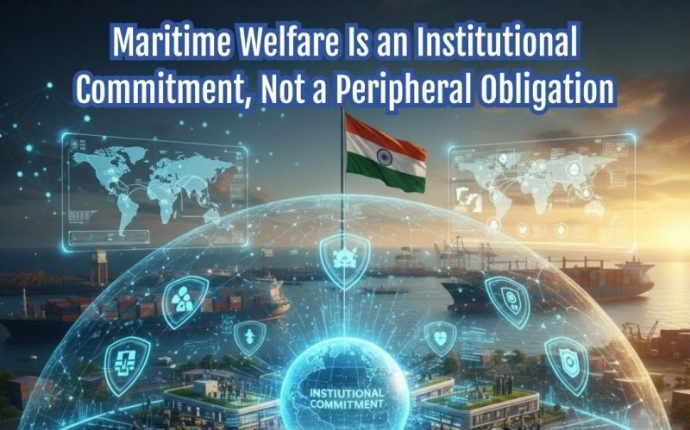
Maritime systems operate across distances that separate labour from the environments in which governance is most immediately visible. Ships move beyond national boundaries. Work is performed far from administrative centres. Professionals operate within conditions shaped by operational necessity rather than proximity to institutional oversight. Under such circumstances, welfare cannot function as an incidental feature of maritime activity. It must function as a deliberate institutional commitment embedded within the structure of governance itself.
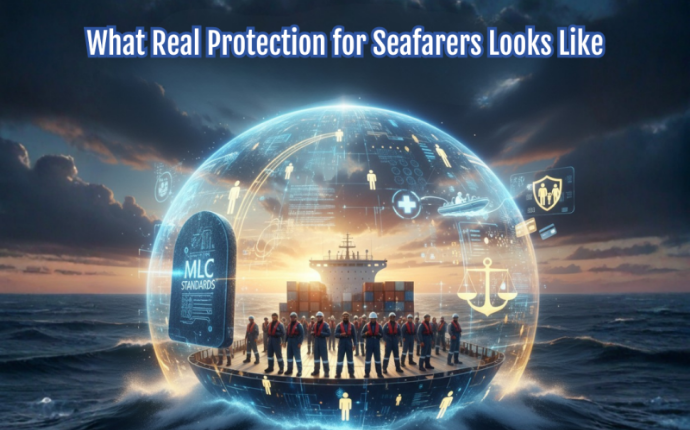
Welfare in maritime systems is often understood through specific forms of protection. Medical support, repatriation, compensation, safe working conditions and social security mechanisms all form part of the framework through which individuals are safeguarded. These provisions are essential because maritime work involves exposure to physical, psychological and economic risk that is both continuous and geographically dispersed.
Yet the significance of maritime welfare extends beyond the provision of discrete protections. It reflects how a maritime system defines its relationship with the people whose labour sustains it. When welfare is treated as a peripheral obligation, addressed only when specific contingencies arise, it functions primarily as response. When welfare is understood as an institutional commitment, it becomes a continuous structural feature of maritime governance.
Institutional commitment implies that welfare is integrated into the architecture of maritime systems rather than positioned at their margins. It means that protection is not merely reactive but anticipatory. Mechanisms exist not only to address harm when it occurs but to sustain stability across the full lifecycle of maritime employment. Welfare becomes an enduring framework through which participation remains secure even when work takes place far from immediate institutional presence.
India’s maritime sector operates within this expansive conception of welfare. The country’s seafaring workforce participates globally, often serving across international fleets under varied operational conditions. Ensuring continuity of protection across such diversity requires institutional frameworks that extend beyond national territory while remaining grounded in domestic governance structures.
Welfare systems therefore interact with regulatory standards, financial assurance mechanisms and administrative processes that together support the wellbeing of maritime professionals across their careers. Certification frameworks recognise competence. Labour protections establish rights. Financial arrangements secure compensation and support. Administrative structures coordinate response across jurisdictions. Each of these components contributes to a comprehensive environment of protection.
As maritime activity expands, the importance of welfare as a structural commitment becomes increasingly evident. Larger workforces, broader global engagement and evolving operational conditions introduce new forms of exposure that cannot be addressed effectively through isolated measures. Protection must function continuously, supporting individuals across varied contexts and extended timeframes.
Welfare systems that operate structurally contribute to stability at multiple levels. For individuals, they provide assurance that participation in maritime professions remains secure across uncertain conditions. For enterprises, they support workforce continuity and professional confidence. For institutions, they reinforce credibility by demonstrating sustained commitment to those who sustain the system itself.
Globally, maritime economies that maintain strong and stable labour participation often demonstrate robust welfare frameworks embedded within governance structures. These frameworks do not merely respond to incidents. They create environments in which individuals can engage professionally with confidence that institutional support remains present even when work occurs far from institutional proximity.
India’s maritime ecosystem reflects growing awareness of the strategic importance of such frameworks. Welfare is not viewed solely as a protective measure but as a foundational element of maritime capability. Human capital continuity depends on professional environments that remain secure across operational uncertainty. Governance that integrates welfare structurally supports this continuity.
The Indian Maritime Federation observes the centrality of welfare through engagement with workforce communities, industry participants and regulatory institutions. Experience indicates that maritime systems function with greater resilience when protection is embedded within governance rather than addressed episodically. Dialogue that strengthens alignment between welfare provision and institutional design contributes to long-term stability.
Institutional commitment to welfare also shapes how maritime systems respond to change. Technological innovation, environmental regulation and evolving operational models alter the conditions under which maritime professionals work. Systems that maintain structured welfare frameworks adapt more effectively because protection evolves alongside operational transformation. Individuals remain supported even as the nature of work changes.
The global dimension of maritime labour further reinforces the importance of institutional commitment. Professionals frequently move across jurisdictions where regulatory and welfare standards may differ. Systems that maintain consistent protection across such mobility sustain confidence in participation. Welfare becomes a continuous presence rather than a variable condition.
India’s maritime workforce, with its extensive global engagement, depends on precisely such continuity. Domestic institutional frameworks must interact with international arrangements in ways that preserve protection regardless of operational context. Governance therefore functions not only within national boundaries but across networks of global cooperation that sustain welfare across distance.
Welfare also carries broader social implications. Maritime employment supports families, communities and regional economies. Protection that remains stable across time contributes to social stability beyond the maritime sector itself. Institutional commitment to welfare therefore represents not only professional support but a broader societal investment in continuity of livelihoods.
Maritime systems have always depended on human participation that extends across environments of uncertainty. Historically, protection was often localised and episodic. Modern maritime governance reflects recognition that sustained participation requires sustained support. Welfare becomes a permanent structural element of maritime organisation.
As India continues to expand its maritime engagement, the strength of its welfare frameworks will remain central to sustaining workforce participation and institutional credibility. Protection that is embedded rather than peripheral ensures that maritime activity can expand without compromising the security of those who sustain it.
Maritime systems operate across vast distances, but institutional commitment must remain constant. Welfare provides the mechanism through which this constancy is expressed. It affirms that governance extends beyond regulation of activity to include responsibility for those who perform it.
In the long evolution of maritime economies, the most enduring systems have been those that recognised welfare not as an optional extension of governance but as one of its defining responsibilities. Institutional commitment transforms protection from response into structure. It ensures that maritime activity remains not only productive but humane across generations of participation.
As India’s maritime future continues to develop, welfare embedded within governance will remain one of the quiet yet essential foundations of enduring maritime strength.