Liquidity, Compliance and the Hidden Cost of Static Financial Structures
Financial stability is often associated with solidity. Institutions demonstrate strength through reserves, guarantees and commitments that signal their capacity to withstand uncertainty. These visible assurances form an essential part of governance across sectors where responsibility must be demonstrable and enforceable. Maritime activity, with its complex risk environment and global regulatory expectations, has long relied on such structures to confirm that obligations will be met under all circumstances.
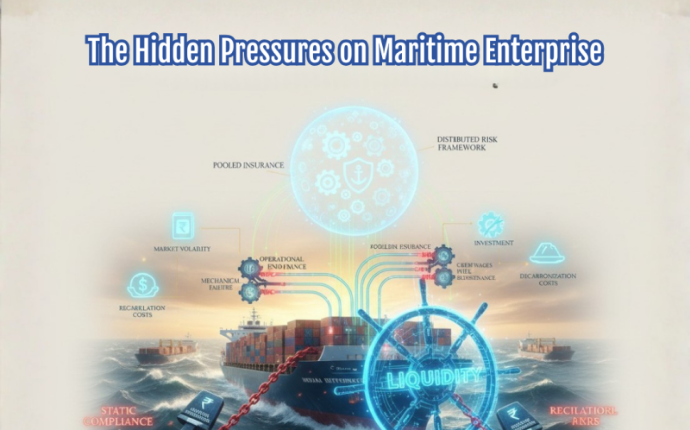
Yet stability expressed through solidity carries a structural consequence that is not always immediately visible. Financial resources that remain fixed in precautionary arrangements do not circulate within the system. They remain present, but inactive. Their existence provides assurance, but their immobilisation creates a quiet economic condition that influences how the system functions over time. This condition is liquidity constraint.
Liquidity, in economic terms, refers to the capacity of financial resources to move in response to need or opportunity. It is not simply the presence of capital but its availability for productive use. In sectors where operations are continuous and exposure to uncertainty is persistent, liquidity becomes a defining factor of resilience. Systems that can deploy financial resources quickly adapt more readily to change. Systems in which capital remains structurally static must manage adjustment through effort rather than financial flexibility.
Maritime governance has historically emphasised certainty of financial responsibility. Static financial commitments—held in reserve against defined contingencies—have provided clear assurance that obligations can be fulfilled. These commitments perform an important institutional function. They establish credibility, reinforce accountability and protect stakeholders whose welfare depends on reliable response to adverse events.
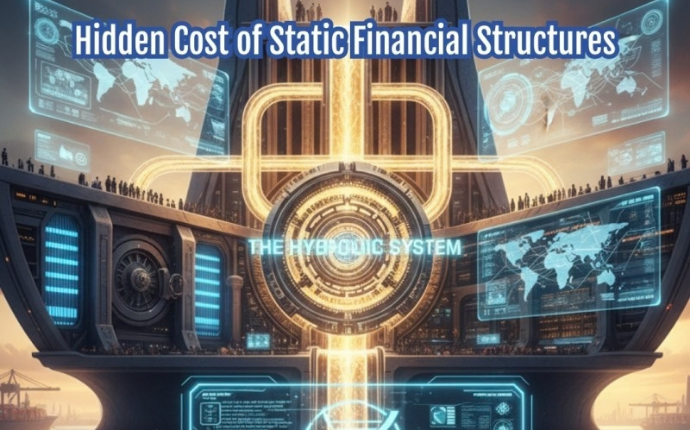
At the same time, the accumulation of static financial structures influences the economic environment within which maritime activity occurs. Capital committed to fixed forms of assurance cannot simultaneously support operational investment, technological adaptation or liquidity buffers that enable enterprises to manage routine variability. The system remains secure, yet its financial dynamics become more rigid.
This rigidity is not immediately disruptive. It operates gradually, shaping how financial resources are allocated across the sector. Enterprises plan around the knowledge that a portion of their capital must remain immobilised to satisfy precautionary requirements. Financial flexibility becomes structured rather than fluid. Decisions about expansion, modernisation or innovation must account not only for available capital but for capital that cannot be redeployed because it is held in static form.
India’s maritime sector illustrates this dynamic with increasing clarity. The scale of maritime operations, the diversity of enterprise participation and the complexity of regulatory engagement all require significant financial commitment. Static financial arrangements provide assurance that responsibility is demonstrable across multiple domains. Yet as the sector expands, the aggregate volume of capital held in such arrangements grows correspondingly. What was once a stabilising requirement for individual actors becomes a structural financial characteristic of the system as a whole.
Liquidity constraint at the systemic level influences more than investment patterns. It shapes how compliance itself is experienced. Compliance is often understood as adherence to defined standards and procedures. Financially, however, compliance also involves maintaining the resources necessary to demonstrate that adherence continuously. When these resources remain fixed, compliance becomes associated not only with regulatory behaviour but with financial immobilisation.
This association introduces a hidden cost. Not a cost measured directly through expenditure, but a cost expressed through foregone flexibility. Capital that cannot move cannot respond. It cannot absorb short-term operational fluctuation without recourse to additional financing. It cannot be redeployed quickly to support emerging requirements. It cannot be integrated into dynamic risk management frameworks that depend on active financial participation rather than static reservation.
Globally, mature maritime economies have increasingly examined the relationship between financial assurance and liquidity. The objective has not been to reduce the level of protection embedded within governance structures. Rather, it has been to explore how assurance can coexist with financial mobility. Mechanisms that distribute exposure dynamically allow protection to remain intact while enabling capital to circulate more productively within the system.
This shift reflects recognition that financial stability depends not only on the existence of reserves but on the system’s ability to deploy resources efficiently when conditions change. Liquidity supports continuity by allowing adjustment to occur without structural strain. Static assurance provides certainty, but liquidity provides responsiveness. Both are necessary. The balance between them determines how resilient the system remains under varying conditions.
India’s maritime ecosystem now operates within an environment where this balance carries growing significance. Continued expansion in workforce participation, commercial engagement and regulatory complexity increases the scale at which financial commitments must be maintained. Ensuring that these commitments support rather than constrain sectoral adaptability becomes an important institutional consideration.
The relationship between liquidity and compliance is therefore evolving. Compliance no longer relates solely to procedural adherence or financial capacity in reserve. It increasingly relates to the structural design of financial assurance itself. Systems that maintain protection while preserving liquidity create conditions in which compliance supports operational resilience rather than limiting it.
Within the maritime community, awareness of this relationship is emerging through observation of how financial structures interact with operational realities. Enterprises that maintain greater financial flexibility often demonstrate higher capacity to absorb routine variability without strain. Systems in which capital remains widely immobilised must rely more heavily on external adjustment when conditions shift. The difference lies not in the presence of resources but in their accessibility.
The Indian Maritime Federation observes these patterns through engagement across the sector’s financial and operational landscape. Experience suggests that governance frameworks achieve greater durability when financial assurance mechanisms operate in ways that preserve both stability and liquidity. Supporting dialogue around this balance contributes to the long-term coherence of maritime economic development.
Liquidity does not replace assurance. It complements it. Assurance confirms that obligations will be met. Liquidity ensures that the system can continue to function smoothly while those obligations remain pending or are being fulfilled. Together, they create an environment in which stability and adaptability coexist.
As India’s maritime sector continues to expand its role within global shipping networks, the structure of its financial commitments will influence not only security but responsiveness. Static financial arrangements will continue to play an essential role in demonstrating responsibility. Yet the capacity to maintain financial movement within the system will increasingly shape how effectively enterprises and institutions respond to evolving conditions.
The hidden cost of static financial structures lies not in what they require directly but in what they limit indirectly. They secure certainty, but they may constrain flexibility if not balanced by mechanisms that allow financial resources to circulate. Recognising this dynamic does not diminish the value of financial assurance. It invites attention to how assurance is structured within an environment where continuous adaptation is essential.
Maritime systems depend on stability to function. They depend equally on movement to remain viable. Financial structures that combine these two qualities—certainty and circulation—support resilience that extends beyond compliance into long-term sustainability. In the quiet architecture of maritime finance, liquidity becomes not merely an economic concept but a structural condition through which the sector sustains its capacity to move, adapt and endure.