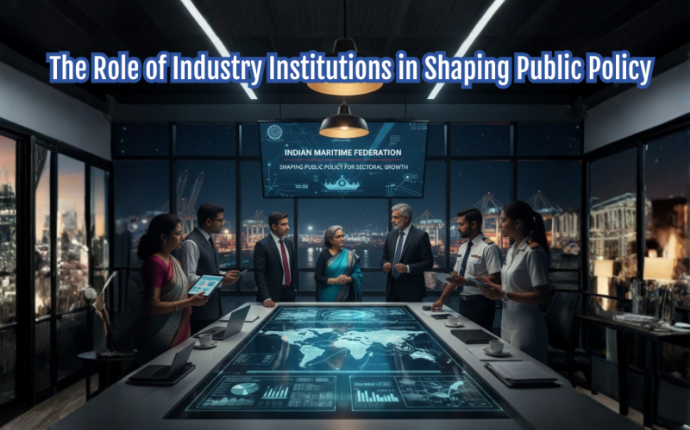
Public policy rarely emerges in isolation. It is formed within an environment shaped by information, experience and institutional dialogue. Governments define direction, establish frameworks and exercise authority, but the context within which decisions are made is influenced by the flow of knowledge from those who operate within the systems being governed. In sectors characterised by technical complexity, economic significance and global interdependence, this exchange of knowledge is not peripheral to policymaking. It is integral to its effectiveness.
Maritime activity represents one of the clearest examples of such a sector. Its operations span multiple jurisdictions, its regulatory frameworks interact with international conventions and its economic impact extends across supply chains that connect domestic production with global markets. Within this environment, policymaking must account for realities that are both highly specialised and continuously evolving. Decisions taken at the level of governance influence not only administrative structures but also operational practice, financial stability and workforce welfare across interconnected domains.
Industry institutions emerge within this landscape as structured repositories of collective experience. They bring together the perspectives of operators, professionals and stakeholders who engage daily with the practical realities of maritime activity. Through dialogue, analysis and representation, they translate lived operational knowledge into forms that can inform policy deliberation. Their role is not to determine regulatory outcomes but to ensure that policymaking remains grounded in an accurate understanding of how systems function in practice.
The presence of such institutions reflects recognition that effective governance benefits from sustained engagement with the environments it regulates. Maritime operations involve technical processes, financial arrangements and human conditions that are often complex and interdependent. Understanding how these elements interact requires insight that extends beyond formal documentation. Industry institutions provide this insight by maintaining continuous connection with the operational sphere while also engaging constructively with the policy sphere.
Historically, sectors that have achieved long-term stability and growth have often been characterised by structured channels of communication between public authorities and organised industry bodies. These channels allow information to flow in both directions. Governments articulate policy objectives and regulatory priorities. Industry institutions communicate the operational implications of those objectives and priorities. The resulting dialogue supports policies that are not only well-intentioned but also practically aligned with the environments they are designed to influence.
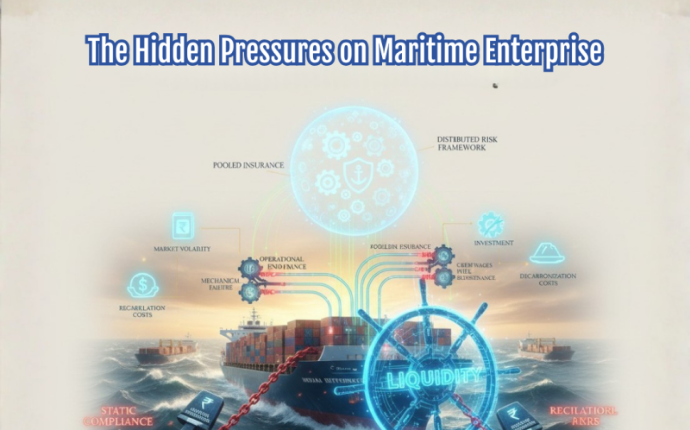
In maritime systems, this alignment is particularly important because the consequences of policy decisions often unfold across multiple layers simultaneously. A regulatory adjustment may influence technical operations, financial planning and labour conditions at once. Policies that affect certification processes may alter workforce mobility. Financial assurance requirements may shape capital allocation and investment patterns. Administrative procedures may influence the pace of operational activity. Industry institutions, by virtue of their broad engagement, are uniquely positioned to observe these interconnections and communicate their implications in an integrated manner.
India’s maritime sector has experienced sustained expansion in scale, complexity and global engagement. As the sector grows, the range of issues requiring policy attention naturally broadens. Regulatory frameworks must adapt to evolving international standards. Welfare systems must respond to changing workforce dynamics. Financial and administrative structures must remain proportionate to the environment they govern. Each of these areas benefits from informed dialogue that connects institutional objectives with operational experience.
Industry institutions contribute to this dialogue not through advocacy alone but through interpretation. They observe how policy interacts with practice and articulate where alignment is strong and where further refinement may enhance coherence. This interpretive role requires both technical understanding and institutional responsibility. It involves presenting perspectives in ways that support constructive engagement rather than adversarial negotiation. The objective is not to contest governance but to strengthen it by ensuring that policy frameworks remain responsive to the environments they shape.
The effectiveness of such engagement depends on trust—trust that information shared by industry institutions reflects genuine operational experience, and trust that policymakers will consider this information within the broader context of public interest. When trust is present, dialogue becomes collaborative rather than transactional. Policy development becomes a process of continuous refinement informed by diverse sources of knowledge. Governance evolves not through isolated decision-making but through structured interaction among institutions that share responsibility for the system’s stability.
Within India’s maritime ecosystem, the role of industry institutions has been gradually expanding alongside the sector’s growth. As activity becomes more interconnected and policy environments more complex, the value of organised representation and structured dialogue becomes increasingly evident. Industry institutions provide continuity in engagement, ensuring that communication with public authorities is sustained rather than episodic. They create platforms through which collective experience can be articulated with clarity and coherence.
This role is particularly significant in areas where policy intersects with long-term structural development. Maritime governance involves decisions that shape the sector’s trajectory over extended periods. Infrastructure planning, workforce development, regulatory design and welfare systems all operate within timelines that extend beyond immediate operational cycles. Industry institutions contribute to these long-term considerations by offering perspectives informed by sustained observation of sectoral evolution.
The Indian Maritime Federation participates in this institutional landscape as a platform for dialogue, reflection and representation across multiple segments of the maritime community. Through engagement with operators, professionals and regulatory authorities, it contributes to the flow of information that supports policy deliberation. Its role is not to define governance outcomes but to facilitate understanding of how policy interacts with operational realities across diverse contexts.
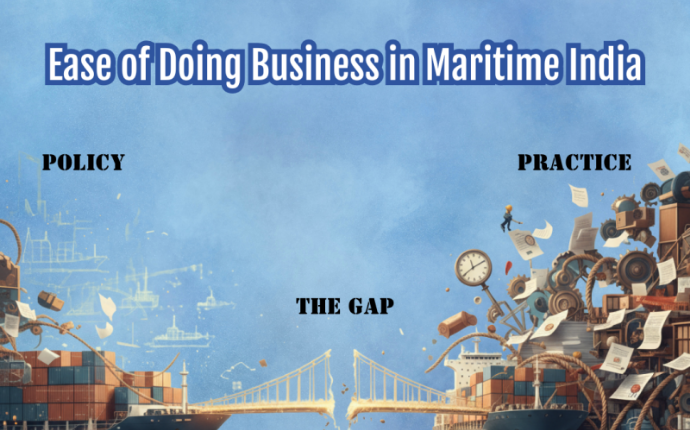
Such engagement reflects a broader principle that effective policymaking benefits from structured participation by institutions that represent the environments affected by regulation. This principle does not diminish the authority of public decision-making. It enhances its precision by ensuring that policies are informed by comprehensive understanding. Where dialogue is sustained, governance becomes more adaptive. Where communication is limited, the distance between intention and outcome may widen.
Globally, maritime sectors that have maintained strong institutional dialogue between public authorities and industry bodies often demonstrate greater coherence in regulatory implementation and operational stability. Policy adjustments occur with awareness of their practical implications. Administrative processes evolve with attention to their impact on system functioning. Welfare frameworks adapt to the changing conditions of maritime labour. The presence of structured engagement allows governance to evolve in step with activity rather than in response to it after strain becomes evident.
India’s maritime sector continues to move through a period of sustained development and increasing global integration. The interaction between public policy and industry experience will play an important role in shaping how this development unfolds. Institutions that facilitate dialogue contribute to the stability of this interaction by ensuring that information flows continuously and constructively between those who design governance frameworks and those who operate within them.
The role of industry institutions in shaping public policy is therefore neither peripheral nor dominant. It is integrative. It connects operational knowledge with institutional responsibility. It supports governance that is both principled and practical. In sectors as complex and globally engaged as maritime activity, this integrative function becomes an essential component of institutional maturity.
Public policy provides direction. Industry experience provides context. Where these elements interact through structured institutional engagement, governance becomes more responsive, more coherent and more capable of supporting sustained sectoral growth. As India’s maritime system continues to expand its reach and deepen its responsibilities, the role of industry institutions in sustaining this dialogue will remain a central feature of its evolving institutional landscape.