There are moments in the evolution of a nation’s economic life when change is not merely incremental but directional. These moments are not always marked by dramatic events or visible turning points. More often, they emerge quietly, shaped by converging trends that alter the trajectory of growth, institutional responsibility and global engagement all at once. They reveal themselves gradually, through shifts in scale, expectation and opportunity that together redefine what the future can reasonably demand. India’s maritime sector now stands within such a moment, one that is less about immediate transformation and more about the long arc of structural positioning that will shape the decades ahead.
Maritime activity has always played a foundational role in the country’s engagement with the world. Trade routes, port development and seafaring traditions have long connected India to global commerce and exchange. Yet the character of that connection has been evolving. The expansion of global trade networks, the reconfiguration of supply chains, the growing mobility of maritime labour and the increasing technological sophistication of shipping operations have all contributed to an environment in which maritime capability is no longer simply an economic function. It is a strategic dimension of national presence. The sea is not merely a channel of movement. It is a domain through which credibility, reliability and institutional maturity are continuously expressed.
Over the past several decades, India has steadily strengthened the foundations of its maritime ecosystem. The scale of its seafaring workforce has grown significantly, placing Indian professionals at the centre of global maritime operations. Port infrastructure has expanded and modernised, reflecting sustained investment in connectivity and efficiency. Regulatory institutions have developed increasingly complex frameworks to oversee safety, certification and compliance in an industry that operates across multiple jurisdictions simultaneously. Training institutions have aligned their standards with international expectations, contributing to the reputation of Indian maritime personnel as capable and adaptable participants in a global profession. Each of these developments reflects deliberate progress, yet together they signal something more profound than gradual expansion. They signal the emergence of systemic capability.
Systemic capability carries with it a different set of expectations than incremental growth. When a sector reaches sufficient scale and integration, its role within the broader economy begins to shift. It is no longer defined solely by its contribution to trade or employment. It becomes a platform through which national credibility is expressed and sustained. For maritime activity, this shift is particularly significant because the sector operates inherently within international environments. The reliability of regulatory systems, the predictability of welfare arrangements, the clarity of operational frameworks and the stability of institutional coordination all become visible to global partners who interact with India’s maritime ecosystem daily. Capability, once established, must therefore be maintained not only internally but also perceptibly.
The coming decade carries decisive importance precisely because it will determine how this capability is consolidated. Growth in maritime activity is expected to continue across multiple dimensions. Trade volumes are projected to expand alongside economic development. The demand for skilled maritime labour is likely to remain strong as global shipping networks evolve. Technological change is accelerating, reshaping vessel operations, logistics management and compliance verification. Environmental considerations are introducing new regulatory frameworks that will influence both commercial practice and governance structures. Each of these developments introduces opportunity. Each also introduces complexity that must be managed with coherence.
The defining characteristic of a decisive period is not the presence of change alone but the density of simultaneous change across multiple domains. Economic expansion, technological transition, regulatory evolution and workforce mobility are unfolding in parallel. The interaction among these forces will determine whether the maritime ecosystem advances with integrated momentum or encounters structural strain as different components adjust at different speeds. Where alignment is sustained, growth becomes self-reinforcing. Where alignment weakens, systems that once functioned smoothly may experience increasing pressure simply to maintain equilibrium.
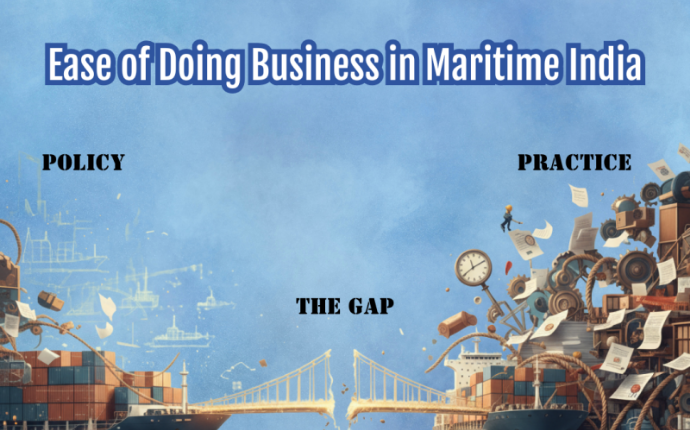
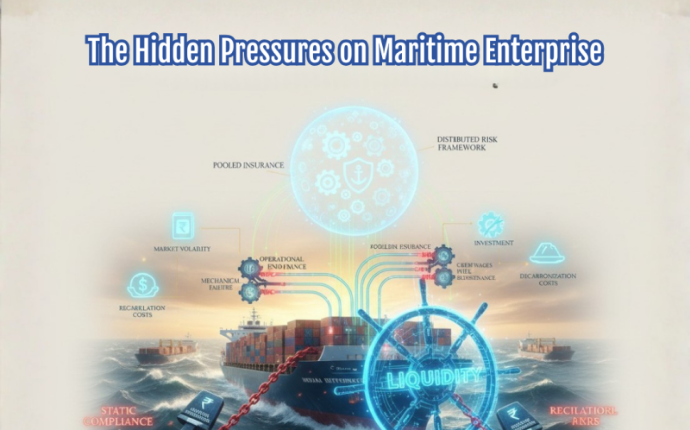
India’s maritime institutions now operate at a scale where alignment itself becomes a central objective. Regulatory frameworks must accommodate rising volumes of activity without sacrificing clarity or predictability. Welfare systems must provide assurance that remains consistent across diverse operational contexts. Financial and administrative structures must support investment and innovation while preserving accountability. Training and certification pathways must adapt to evolving global standards without losing continuity. None of these tasks is unfamiliar. What distinguishes the present moment is the degree to which they must be pursued simultaneously and with sustained coordination.
The experience of other maritime nations suggests that such periods of consolidation are often the most consequential in shaping long-term trajectory. Initial growth establishes presence. Consolidation determines durability. It is during consolidation that institutional architecture is refined, governance systems are recalibrated and operational practices are aligned with the realities of scale. Decisions made during such periods rarely produce immediate visible change. Their significance lies in the stability they create for future expansion. They define how smoothly a system can absorb additional growth without encountering disproportionate strain.
For India, the strategic importance of maritime development extends beyond sectoral performance alone. The reliability of shipping operations influences trade competitiveness. The credibility of maritime labour systems influences international employment opportunities. The coherence of regulatory frameworks influences investment decisions and global partnerships. Each of these relationships connects maritime capability to broader national economic objectives. The next decade will therefore shape not only the internal evolution of the maritime sector but also its contribution to India’s wider economic positioning.
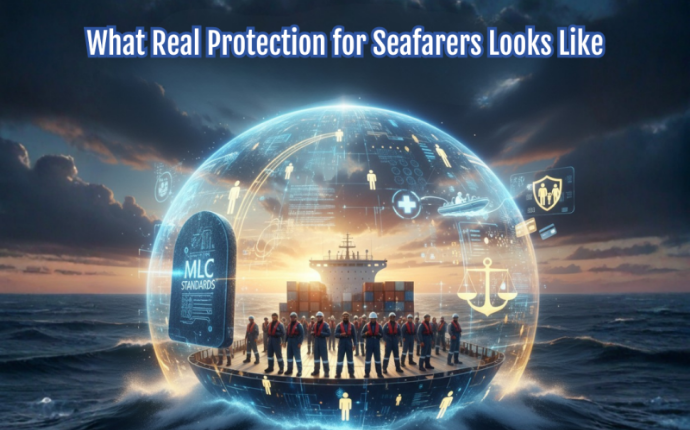
Within this landscape, the concept of preparedness acquires particular significance. Preparedness does not imply anticipation of specific events but readiness for sustained expansion under conditions of uncertainty. It reflects the capacity of institutions to function predictably even as the environment around them becomes more dynamic. Preparedness is achieved not through isolated adjustments but through continuous refinement of the systems that support everyday operations. It is expressed through governance structures that remain coherent under pressure, welfare mechanisms that respond reliably across varied circumstances and administrative processes that remain proportionate to the activity they support.
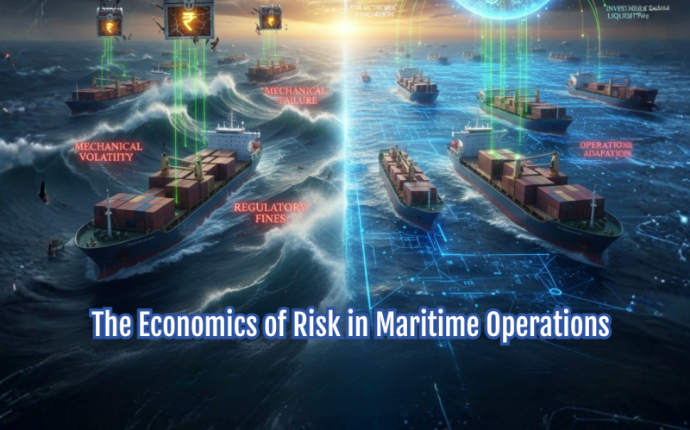
The coming decade will test this preparedness not through singular challenges but through cumulative demand. The volume of maritime engagement will increase. The expectations placed upon institutions will expand. The interdependence between domestic frameworks and global standards will deepen. Each of these developments will require responses that are measured, coordinated and forward-looking. The effectiveness of those responses will depend on how well existing structures have been aligned with the realities of scale before pressure intensifies.
Within the maritime community, there is growing awareness that the present period represents an opportunity as much as a challenge. When sectors reach moments of consolidation, they possess the experience necessary to reflect on what has been achieved and the foresight to shape how future expansion will unfold. The knowledge accumulated through years of operational practice provides insight into where systems function smoothly and where refinement may enhance resilience. Dialogue among regulators, industry participants, welfare bodies and policy institutions becomes particularly valuable during such periods because it allows experience to inform design in deliberate ways.
The Indian Maritime Federation approaches this period with a recognition that sustained growth requires sustained coherence. Engagement across the sector reveals a shared understanding that institutional maturity is not defined solely by the ability to expand but by the ability to remain balanced as expansion continues. Supporting this balance involves contributing to conversations that examine how governance, welfare and operational frameworks can evolve in ways that reinforce one another. The objective is not to accelerate change but to ensure that change unfolds with structural clarity.
As India’s maritime presence continues to deepen its integration into global networks, the question of how capability is maintained will remain central. The next decade will shape perceptions of reliability, adaptability and institutional strength in ways that extend far beyond immediate commercial outcomes. Maritime sectors that navigate periods of consolidation with coherence emerge with systems capable of sustaining long-term expansion without disproportionate adjustment. Those that do not often find themselves engaged in continuous reactive adaptation as growth outpaces structural alignment.
The significance of the present moment lies therefore not in urgency but in potential. The maritime ecosystem has reached a level of development where deliberate refinement can shape how future growth is experienced. The structures established now will influence how confidently the sector moves through the decades that follow. They will determine whether expansion feels cumulative and stable or intermittent and demanding. They will define how smoothly India’s maritime capabilities translate into enduring institutional strength.
In the quiet unfolding of national economic history, decisive periods are often recognised only in retrospect. They are understood not by what happened within them but by what became possible because of how they were navigated. India’s maritime sector now moves through such a period with accumulated experience, expanding opportunity and growing global presence. The choices made in shaping institutional alignment, governance coherence and operational resilience during the coming years will influence how that presence continues to evolve. Within that unfolding trajectory lies the steady emergence of a maritime system prepared not only for growth, but for the enduring responsibility that accompanies it.