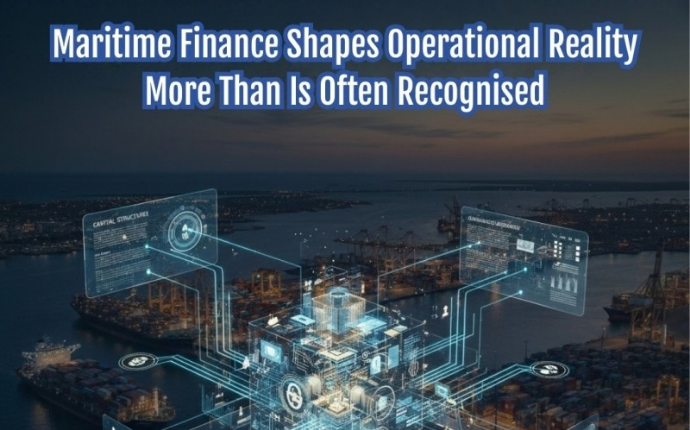
Maritime activity is frequently understood through its physical and operational dimensions. Ships move across oceans, cargo passes through ports and trade flows connect markets separated by vast distance. These visible processes define the practical expression of maritime commerce. Yet beneath these operations lies a financial architecture that shapes how maritime systems function long before vessels begin their voyages.
Finance in maritime systems is not merely a supporting mechanism. It is a structural force that determines what forms of activity are possible, what risks can be absorbed and what scale of participation can be sustained. Decisions made within financial frameworks influence operational reality in ways that are often subtle but deeply consequential.
Every maritime operation is underpinned by financial arrangements that extend across multiple layers of activity. Vessels are financed through capital structures that must remain viable across long operational lifecycles. Compliance obligations require financial assurance that responsibilities can be fulfilled under varying conditions. Workforce welfare is secured through mechanisms that guarantee protection across global employment contexts. Infrastructure development depends on financing models capable of supporting extended periods of investment before return is realised.
These financial structures do not exist separately from maritime operations. They define the parameters within which operations occur. The availability of capital influences fleet expansion. The design of assurance mechanisms shapes enterprise liquidity. The structure of financial risk distribution determines how resilient activity remains under strain. Finance does not simply enable maritime operations. It configures them.
Maritime systems are distinctive in the scale and duration of financial commitment they require. Assets operate over decades. Exposure spans multiple jurisdictions. Risk is distributed across technical, environmental and commercial dimensions simultaneously. Financial architecture must therefore be designed to manage complexity that is both extensive and continuous. Stability depends not only on individual financial strength but on how financial structures interact across the system as a whole.
India’s maritime sector reflects this intricate relationship between finance and operation. Enterprises engage with capital markets, financial assurance requirements and regulatory obligations that collectively shape their capacity to participate in maritime activity. Workforce welfare mechanisms depend on structured financial protection. Compliance frameworks rely on demonstrable financial responsibility. Institutional governance interacts continuously with financial arrangements that support operational continuity.
As the sector expands, the influence of financial architecture becomes increasingly pronounced. Growth multiplies exposure. Larger fleets require greater capital investment. Expanding workforce participation increases the scale of welfare-related financial commitments. Infrastructure development introduces long-term financing obligations that must remain sustainable across changing economic conditions. Each of these developments deepens the connection between financial design and operational capacity.
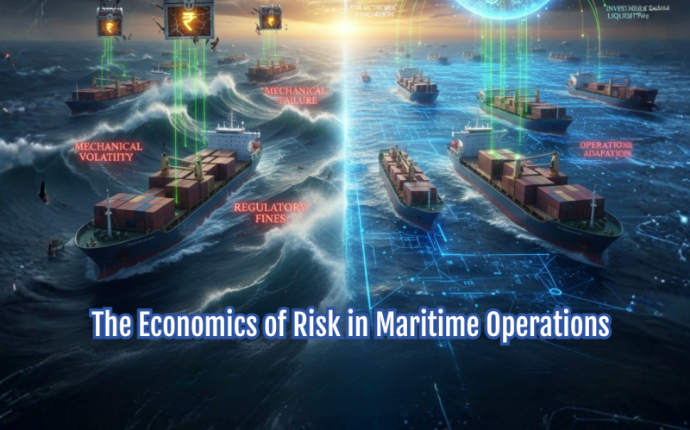
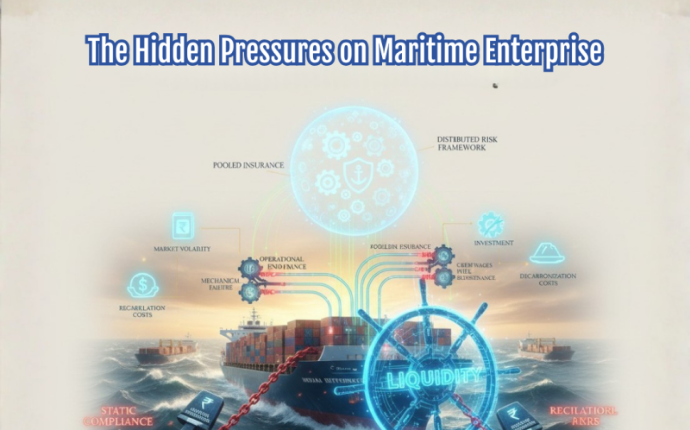
Financial structures determine not only how activity is financed but how risk is distributed across participants. When risk is concentrated within individual enterprises, operational stability depends heavily on the resilience of those entities. When risk is distributed across structured financial mechanisms, stability becomes a systemic property rather than an individual burden. The architecture of finance therefore influences the resilience of the entire maritime environment.
Globally, maritime systems that demonstrate sustained stability often operate within financial frameworks that align risk distribution with operational scale. Insurance mechanisms, pooled financial arrangements and structured assurance systems allow exposure to be managed collectively. Enterprises remain accountable, but risk is organised in ways that prevent individual disruption from cascading into systemic instability.
Such frameworks also influence participation. Financial arrangements that support liquidity and manageable compliance obligations allow a broader range of enterprises to operate effectively. Participation becomes more inclusive without compromising accountability. Financial architecture thus shapes not only stability but the diversity of actors within the maritime system.
India’s maritime ecosystem continues to evolve within this broader global context. As participation expands across domestic and international dimensions, attention increasingly turns to how financial structures support both resilience and growth. Ensuring that financial architecture remains proportionate to operational scale becomes central to sustaining long-term development.
The Indian Maritime Federation observes the structural influence of finance through engagement with industry participants, regulatory frameworks and institutional governance. Experience suggests that maritime systems function most effectively when financial design aligns with operational reality. Dialogue that supports coherence between financial mechanisms and sectoral activity therefore contributes directly to stability.
Financial architecture also influences innovation. Adoption of new technologies, compliance with evolving environmental standards and expansion into emerging operational models often require substantial upfront investment. Financial systems that distribute risk and support long-term capital commitment enable such innovation to proceed without destabilising enterprise viability.
The international dimension of maritime finance further reinforces its structural importance. Shipping operates across jurisdictions where financial recognition, assurance mechanisms and regulatory expectations must interact seamlessly. Systems whose financial frameworks remain transparent and reliable integrate more effectively into global maritime networks.
India’s expanding maritime engagement increasingly depends on such integration. Participation in international shipping systems requires financial arrangements that are understood and trusted across borders. Credible and structured financial architecture becomes a component of institutional credibility itself.
Maritime operations may appear to be driven by movement across water, but their continuity depends on flows of capital that remain stable across time. Financial structures determine whether assets can be maintained, obligations fulfilled and activity sustained under varying conditions. They shape the boundaries within which maritime systems can expand or contract.
In the long development of maritime economies, financial innovation has often preceded operational transformation. The creation of risk-sharing mechanisms, assurance structures and investment models has enabled expansion that would otherwise have remained impractical. Finance has not merely followed maritime growth. It has made such growth possible.
As India’s maritime future continues to unfold, the design of financial architecture will remain a decisive factor in shaping operational reality. Governance frameworks, infrastructure investment and workforce participation all depend on financial arrangements that organise exposure while supporting continuity.
Maritime systems operate within environments where uncertainty cannot be removed but must be structured. Financial architecture provides one of the primary means through which such structuring occurs. It transforms variability into manageable exposure and enables activity to proceed with confidence across extended horizons.
In the quiet structural layers beneath maritime operations, finance functions not as a peripheral support but as a central organising force. It determines how risk is distributed, how capital is mobilised and how participation is sustained. Operational reality, in many respects, is the outward expression of financial design.
Where financial architecture aligns with the scale and complexity of maritime activity, systems remain resilient, inclusive and capable of sustained growth. Where alignment weakens, operational capacity may be constrained even when opportunity remains abundant.
Maritime development is therefore shaped not only by ships and trade but by the invisible structures through which capital flows, risk is managed and obligations are secured. These structures define the economic environment within which maritime activity becomes possible.
In understanding the true dynamics of maritime strength, financial architecture must be recognised as one of its most influential foundations. It shapes the conditions under which maritime systems operate, expand and endure across time.