Maritime Governance in an Interconnected World Requires System Thinking
Maritime activity has always been defined by connection. Ships move between ports, cargo flows across continents, labour operates across jurisdictions and commercial relationships extend across regulatory environments that differ in structure and authority. The maritime domain has never functioned as a collection of isolated activities. It has always been a system — interconnected, interdependent and continuously in motion.
Yet governance, historically, has often developed in segments. Regulatory frameworks emerged to address specific risks. Financial structures evolved to secure defined obligations. Welfare provisions were designed to protect identifiable categories of labour. Administrative procedures were created to manage distinct forms of compliance. Each institutional response addressed a real and necessary concern. Each contributed to stability within its own domain.
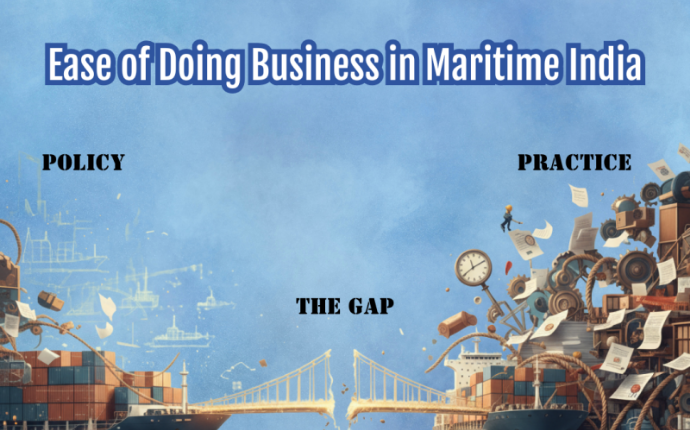
As maritime systems expand and interconnect more deeply, however, the limitations of segmented governance become increasingly visible. Decisions made within one institutional domain now influence outcomes across others. Financial requirements shape operational planning. Welfare frameworks interact with employment mobility. Regulatory processes affect capital allocation. Administrative timelines influence commercial viability. The maritime system functions as a network, yet governance may still operate through structures designed for more compartmentalised conditions.
This is the context in which system thinking becomes essential. System thinking recognises that maritime activity does not unfold in discrete institutional compartments. It unfolds within an integrated environment where actions, policies and processes interact continuously. Governance that reflects this reality seeks coherence across domains rather than optimisation within each domain independently.
System thinking does not eliminate institutional specialisation. Technical regulation, labour protection, financial assurance and operational oversight must each retain their distinct expertise. What changes is the perspective through which these functions are coordinated. Instead of viewing governance as a series of parallel responsibilities, system thinking views governance as a structured interaction among interconnected components whose combined behaviour determines overall stability.
India’s maritime sector now operates at a scale and complexity that makes such perspective increasingly relevant. The country’s engagement with global shipping networks, the expansion of its seafaring workforce and the evolution of its regulatory frameworks all contribute to an environment where institutional domains intersect continuously. Decisions affecting one part of the system rarely remain confined to that part alone.
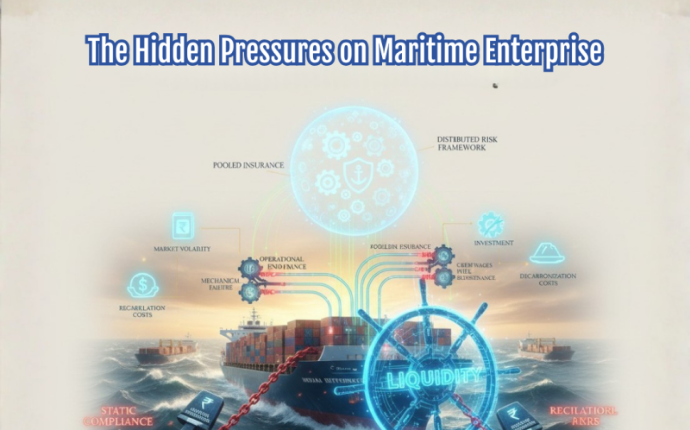
For example, a financial requirement designed to ensure responsibility may influence the capital available for operational investment. Operational adjustments may affect workforce deployment patterns. Workforce mobility may interact with welfare administration across jurisdictions. Each element remains distinct, yet their effects are interrelated. Understanding these relationships requires attention not only to individual policy objectives but to how those objectives function collectively.
System thinking provides a framework for recognising such relationships in advance rather than responding to them after unintended interactions occur. It encourages governance that anticipates cross-domain effects and designs institutional mechanisms that align rather than operate independently. The objective is not simplification of responsibility but integration of perspective.
Globally, maritime systems that have achieved high levels of institutional maturity often exhibit characteristics consistent with system thinking. Regulatory frameworks are developed with awareness of economic implications. Financial structures are designed with attention to operational continuity. Welfare provisions are integrated with employment frameworks. Administrative processes are structured to support coordination across institutional interfaces.
These features do not emerge automatically. They develop through sustained engagement among institutions that recognise their shared participation in a common system. Dialogue becomes structured rather than occasional. Information flows across institutional boundaries. Policy development incorporates feedback from multiple domains simultaneously. Governance evolves as an integrated architecture rather than an accumulation of independent components.
India’s maritime ecosystem has increasingly moved toward such integrative awareness. The expansion of sectoral activity has made visible the ways in which institutional functions intersect. Regulatory decisions are understood to influence economic participation. Financial mechanisms are recognised as shaping operational resilience. Welfare frameworks are seen as integral to workforce stability rather than separate from it.
This growing recognition reflects the natural progression of complex systems. As scale increases, the cost of fragmentation becomes more apparent. Coordination requires effort when institutional domains operate independently. Alignment reduces this effort by embedding interaction within structural design. System thinking therefore functions as a means of sustaining efficiency in environments where complexity cannot be reduced but must be managed coherently.
The Indian Maritime Federation engages with this evolving perspective through its interaction with multiple segments of the maritime landscape. Observations across governance, industry and workforce domains indicate that stability strengthens when institutional relationships are structured with awareness of interdependence. Supporting dialogue that reflects system-level understanding contributes to the sector’s long-term coherence.
System thinking also influences how resilience is understood. In segmented governance models, resilience is often measured within individual domains — the strength of regulatory enforcement, the adequacy of financial assurance, the reach of welfare provision. In integrated systems, resilience is measured by how effectively these domains support one another under stress. The system remains stable not because each component is strong in isolation, but because their interaction allows adaptive response across the whole.
Maritime activity, by its nature, requires such adaptive capacity. Conditions change rapidly. Operational environments shift. Economic and technological developments alter the context within which governance must function. Systems designed with integrated awareness adjust more readily because relationships among institutional components are already structured to accommodate change.
India’s maritime future will unfold within an environment characterised by increasing global interdependence. Trade networks will continue to evolve. Workforce mobility will remain extensive. Regulatory expectations will adapt to emerging challenges. Ensuring that governance keeps pace with this evolution requires frameworks that recognise the system as a whole rather than focusing exclusively on individual components.
System thinking does not represent a new institutional mandate. It represents an orientation — a way of understanding maritime governance as an interconnected architecture whose effectiveness depends on coherence across its parts. It encourages attention to relationships, interactions and cumulative effects. It supports policy development that seeks alignment rather than sequential adjustment.
In practical terms, this orientation fosters governance that moves with greater fluidity. Decisions reflect awareness of cross-domain impact. Institutional coordination becomes embedded rather than reactive. Administrative processes function with continuity across boundaries that remain formally distinct but operationally connected.
Maritime systems have always required coordination across physical distance. Governance in an interconnected world requires coordination across institutional distance as well. System thinking provides the conceptual foundation for such coordination. It allows complex environments to be governed not by dividing responsibility into isolated segments, but by structuring relationships among them.
As India’s maritime sector continues to expand its global engagement and internal complexity, the ability to govern as a system rather than as a collection of separate domains will increasingly shape its capacity for sustained development. Physical infrastructure, regulatory authority, financial assurance and workforce protection will remain essential. Their effectiveness, however, will depend on how coherently they function together.
In the long evolution of maritime governance, the shift toward system thinking reflects a broader recognition that interdependence is not a temporary condition but a permanent feature of modern maritime life. Governance that acknowledges this reality does not reduce complexity. It organises complexity into structures that sustain stability across continuous change.