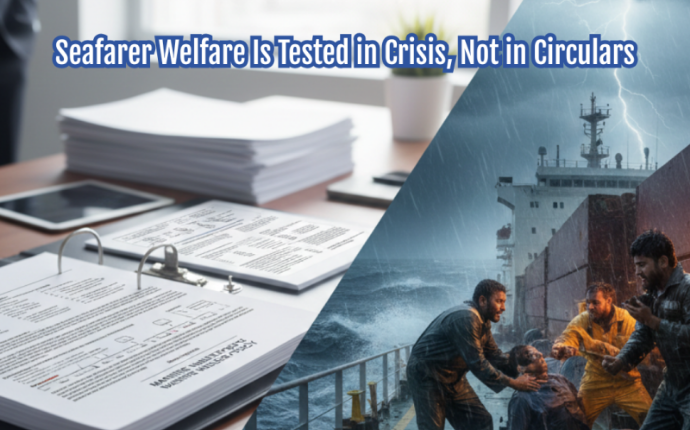
In maritime discourse, welfare is often described in the language of compliance. It appears in regulatory texts, policy commitments, and administrative frameworks that seek to define what protection should look like in principle. The architecture of welfare, when viewed from this formal perspective, seems orderly and structured. Standards are articulated, responsibilities are assigned, and mechanisms of accountability are established. On paper, this creates the impression of completeness. Yet those who live within the maritime ecosystem understand that welfare is not ultimately defined by what is written or prescribed. Its true measure emerges only in moments when certainty dissolves and response becomes the only meaningful form of assurance.
The sea has always carried an element of unpredictability that no regulation can fully remove. Distance, isolation, and exposure to risk are intrinsic to maritime life. Even with advances in technology, communication and monitoring, the profession continues to demand resilience in environments where immediate institutional presence is rarely possible. This reality gives seafarer welfare a distinctive character. Unlike many other labour systems, its effectiveness cannot be evaluated solely through procedures or preparedness. It must be evaluated through outcomes when events unfold beyond anticipation. It is in the immediacy of crisis that the difference between provision and protection becomes visible.
India’s maritime workforce operates within a global environment that places extraordinary trust in the systems that support them. Indian seafarers serve across continents, under multiple flags, and within complex commercial arrangements that span jurisdictions and administrative structures. Their work sustains supply chains that move with unbroken continuity, often far from the institutional frameworks that govern their professional lives on land. This global dispersion makes the reliability of welfare systems not merely a domestic concern but an international expectation. Confidence in the safety, security and support available to seafarers underpins the credibility of the workforce itself.
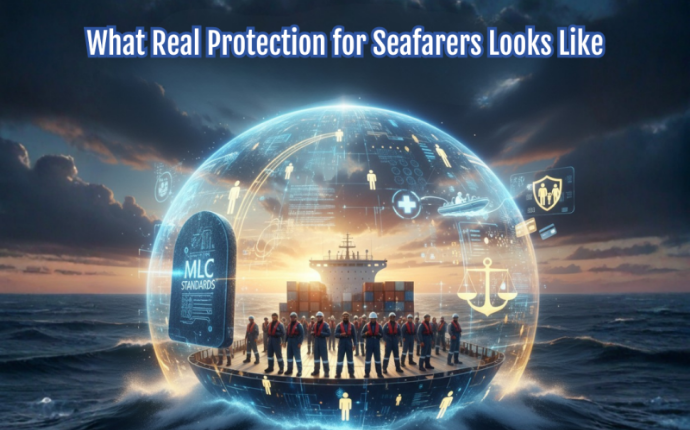
Within such an environment, welfare must function as more than a formal guarantee. It must function as an operational reality that activates without hesitation when circumstances demand it. A medical emergency at sea does not pause for procedural clarification. A wage dispute that leaves a crew member financially vulnerable cannot wait for administrative sequencing to unfold gradually. A serious incident affecting life or livelihood requires not only responsibility but immediacy. The effectiveness of welfare systems therefore depends less on how comprehensively they are described and more on how predictably they respond under pressure.
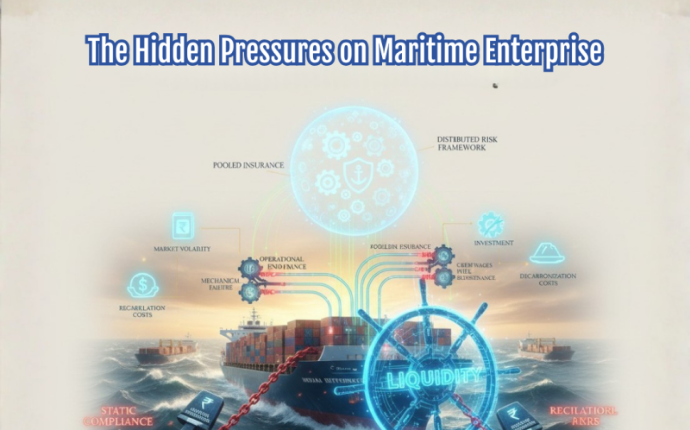
This distinction between description and response becomes particularly significant in sectors where responsibility is distributed across multiple actors. Maritime welfare, by its nature, involves coordination among employers, insurers, regulators, welfare bodies and international frameworks. Each plays a defined role, and each operates within its own administrative logic. When functioning smoothly, this distributed structure allows responsibilities to be fulfilled through established channels. Yet moments of crisis compress time and demand alignment across all components simultaneously. It is here that the true resilience of welfare architecture becomes visible. The question is not whether responsibilities exist, but whether they converge quickly enough to produce meaningful support.
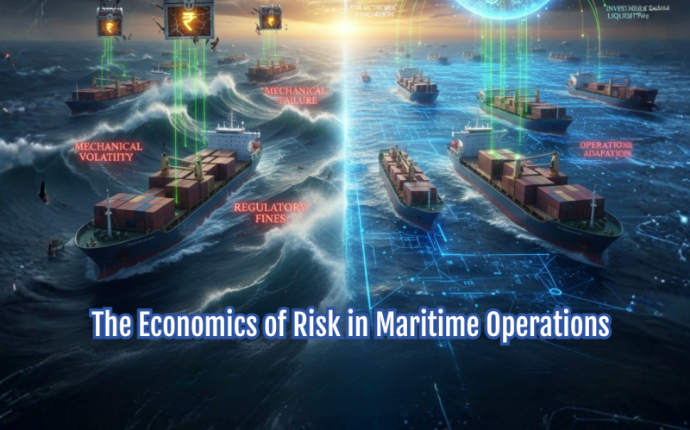
Over time, those who observe maritime welfare closely begin to recognise that most systems perform effectively under routine conditions. Procedures operate as intended, documentation flows through expected pathways, and oversight mechanisms confirm adherence to established norms. These routine conditions, however, do not test structural capacity. They confirm it. The real test occurs when events deviate from the anticipated pattern. When urgency replaces predictability, the strength of a welfare system is measured by the speed and coherence of its response. The moment when a seafarer or their family confronts uncertainty is the moment when institutional design reveals its true character.
The lived experience of maritime families reflects this reality with particular clarity. For those on shore, welfare is not an abstract commitment but a promise that assistance will arrive when it is needed most. Families rarely engage with the details of policy architecture. They engage with outcomes. When communication becomes difficult, when financial security is disrupted, or when health and safety are suddenly at risk, their confidence rests entirely on the system’s ability to respond decisively. A welfare structure that requires prolonged navigation through administrative layers may still satisfy formal requirements, yet it does not deliver the reassurance that defines genuine protection.
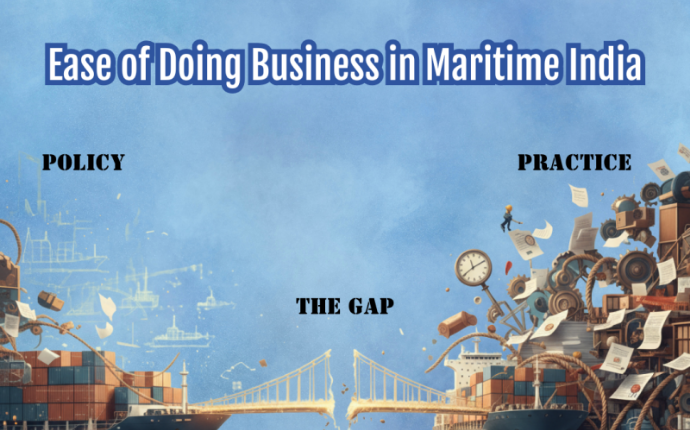
Understanding this distinction does not imply that formal structures lack importance. On the contrary, comprehensive frameworks are essential because they establish responsibility in advance of crisis. They create the legal and administrative foundation that makes response possible. But as maritime systems expand and become more interconnected, the ability of these frameworks to deliver consistent outcomes depends increasingly on how seamlessly they translate into action. A structure that is complete in design but slow in activation cannot fully meet the expectations placed upon it by those whose safety depends on timely support.
Globally, sectors that have confronted similar challenges have gradually shifted their emphasis from defining welfare to ensuring its continuous operability. This shift reflects recognition that assurance must be embedded within the system itself rather than mobilised anew each time an incident occurs. Where welfare arrangements are designed to function automatically under defined conditions, response becomes less dependent on individual intervention and more dependent on structural readiness. Such arrangements do not diminish accountability; they deepen it by ensuring that commitments are fulfilled without delay or uncertainty.
India’s maritime environment is increasingly positioned within this evolving understanding of protection. The scale of its workforce, the diversity of employment contexts and the complexity of administrative coordination all point toward a future in which welfare must function with heightened consistency and immediacy. The objective is not to replace established safeguards but to ensure that they operate with a degree of predictability that matches the realities of modern maritime activity. As the sector grows, the expectation that welfare will respond seamlessly becomes not merely desirable but foundational to institutional credibility.
The development of such assurance requires a form of institutional attentiveness that extends beyond compliance monitoring. It involves continuous reflection on how systems behave when confronted with the unexpected. It involves recognising that procedural adequacy does not always guarantee operational readiness. Most importantly, it involves acknowledging that the measure of welfare lies not in the existence of protection but in its availability at the precise moment it is required. This perspective transforms welfare from a regulatory obligation into an enduring institutional commitment.
Within this landscape, the Indian Maritime Federation views the question of seafarer welfare through the lens of system reliability rather than procedural sufficiency. Engagement with the sector reveals a shared recognition that maritime professionals operate in environments where uncertainty is not an exception but a constant presence. Ensuring that welfare mechanisms function predictably under such conditions requires sustained collaboration among regulatory authorities, industry participants and welfare institutions. The emphasis is not on redefining responsibility but on strengthening the pathways through which responsibility is fulfilled.
Such strengthening is a gradual process shaped by experience, observation and dialogue. It does not arise from dissatisfaction with existing structures but from recognition that evolving operational realities require corresponding evolution in institutional response. The maritime profession has always adapted to technological change, commercial transformation and shifting global conditions. The architecture of welfare, too, must adapt so that assurance remains as constant as the risks it is designed to address.
For India’s maritime sector, this evolution carries significance that extends beyond immediate operational concerns. The reliability of welfare systems influences how seafarers perceive their profession, how families understand their security and how international partners evaluate the dependability of the workforce. Protection that functions consistently under pressure becomes a source of institutional confidence. It signals that the system does not merely define responsibility but embodies it.
As maritime activity continues to expand, the difference between formal commitment and lived assurance will become increasingly central to how welfare is understood. The structures that sustain protection will be judged not by their comprehensiveness alone but by their responsiveness when certainty is replaced by urgency. In this sense, welfare remains inseparable from the moments that test it. It is not the presence of policy that defines protection, but the certainty that support will arrive without hesitation when circumstances demand it. Within that certainty lies the quiet strength of a system that has learned to translate commitment into action whenever the sea reveals its unpredictability.