Regulation, in its most fundamental purpose, exists to create order within complexity. It defines standards, assigns responsibility and establishes pathways through which activity can proceed with safety and accountability. In sectors such as maritime operations, where risk is inherent and consequences often extend beyond national boundaries, regulatory presence is not merely necessary. It is foundational. Without structured oversight, the stability upon which maritime commerce depends would be difficult to sustain.
Yet regulation does not exist solely as principle. It exists as process. Every standard must be translated into a procedure, every responsibility into a verification mechanism and every safeguard into an operational pathway through which compliance can be demonstrated. Over time, as sectors expand and regulatory frameworks evolve to address emerging realities, these procedures accumulate. What begins as a system of defined requirements gradually becomes a system of administrative movement—documentation prepared, submissions reviewed, approvals granted, compliance maintained through ongoing interaction with institutional structures.
This administrative dimension of regulation is not incidental. It is the means through which regulatory intent is expressed in practice. Processes ensure that standards are not merely aspirational but operational. They provide traceability, transparency and accountability across complex environments where activity cannot always be directly observed. In maritime systems that span vast geographic and institutional boundaries, administrative processes function as the connective tissue that holds governance together.
As maritime sectors grow in scale and sophistication, however, the administrative pathways through which regulation operates begin to assume structural significance of their own. Processes that were originally designed to support regulatory objectives become integral features of the operational environment. They shape timelines, influence resource allocation and determine how quickly decisions move from intention to execution. Administrative activity becomes not simply a method of governance but a condition within which governance and operations interact continuously.
India’s maritime sector illustrates this evolution with increasing clarity. Over decades of development, regulatory frameworks have expanded to encompass a broad spectrum of responsibilities—technical standards, labour protection, financial assurance, certification integrity, environmental compliance and international alignment. Each domain has generated procedures designed to ensure that regulatory intent is translated into measurable action. These procedures have strengthened institutional credibility and supported the sector’s growth within global maritime networks.
At the same time, the cumulative effect of procedural expansion has gradually shaped the operational landscape in which maritime enterprises function. Administrative engagement is no longer episodic or limited to specific regulatory interactions. It is continuous. Documentation must be maintained, updated and verified across multiple stages of activity. Compliance requires sustained attention to procedural detail. Institutional interaction becomes an ongoing dimension of operational life rather than an occasional requirement.
This transformation does not indicate regulatory excess. It reflects the natural development of governance in complex environments. As responsibilities multiply and standards become more refined, processes must evolve to support them. Each new requirement is introduced with clear purpose—to enhance safety, ensure fairness, preserve credibility or align with international norms. Yet when procedures accumulate across multiple domains simultaneously, their collective presence begins to influence how the system functions at a structural level.
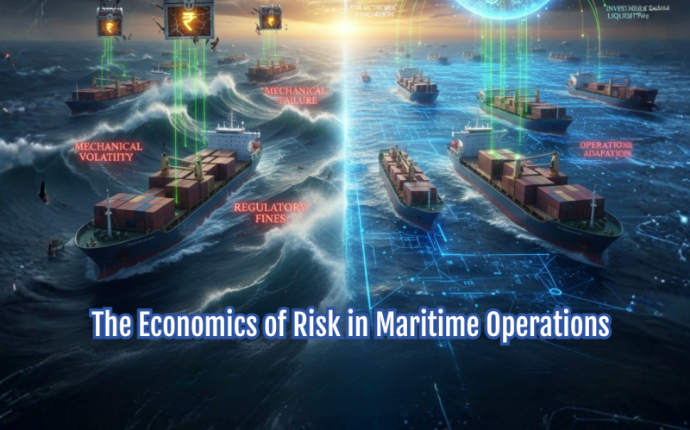
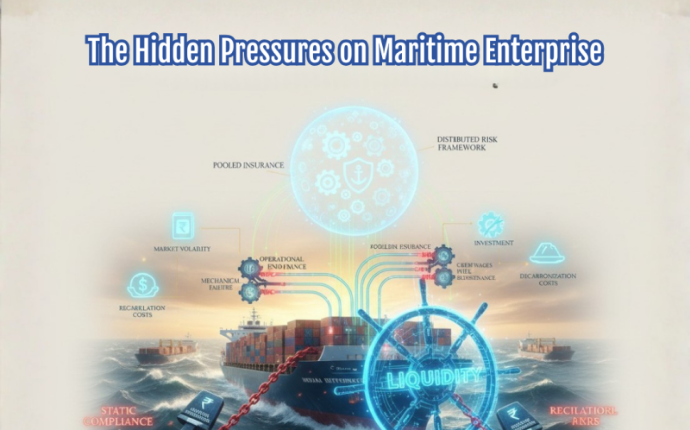
Administrative load, in this sense, becomes an economic and operational factor. Time devoted to procedural fulfilment represents time that must be integrated into operational planning. Resources allocated to compliance management become part of the cost structure of maritime enterprise. Decision cycles are shaped by the sequence of administrative steps that must be completed before action can proceed. The system remains fully functional, yet its rhythm is influenced not only by physical and commercial dynamics but also by the cadence of administrative movement.
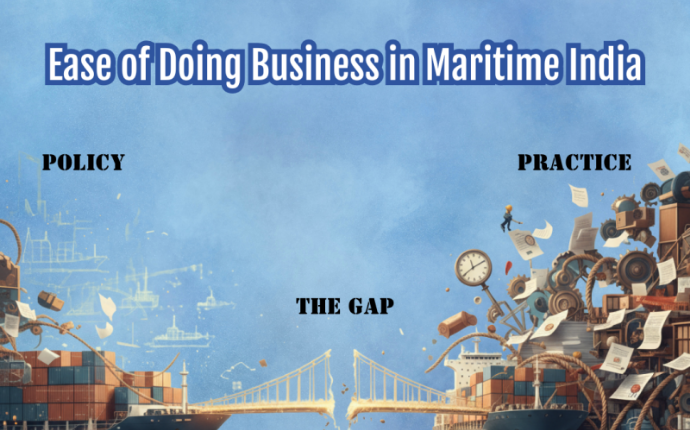
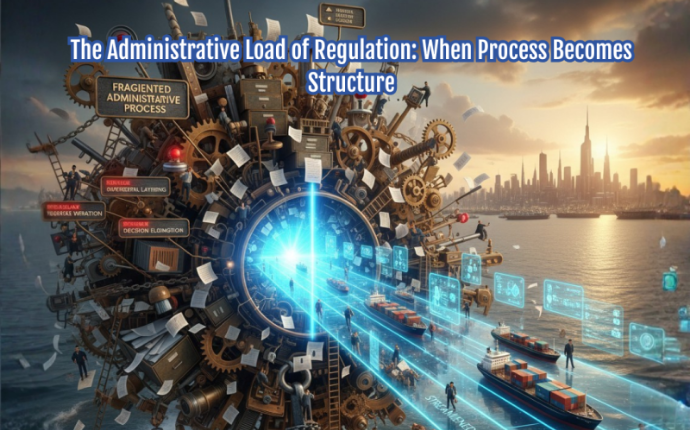
The distinction between process and structure becomes increasingly important under such conditions. Processes are designed to serve regulatory objectives. Structure defines the environment within which activity unfolds. When processes are relatively limited in number and scope, they operate as supportive mechanisms within a broader operational structure. When processes become extensive and continuous, they begin to define the structure itself. The operational environment is then experienced as one in which administrative navigation is as central to functioning as technical or commercial activity.
This shift is subtle and often gradual. It rarely produces immediate disruption. Instead, it manifests as incremental increases in coordination effort, documentation management and procedural sequencing. Each individual requirement remains justified and necessary. The cumulative effect, however, shapes how efficiently the system moves from intention to outcome. Where administrative pathways multiply, the distance between decision and execution may extend even when all participants remain fully compliant and cooperative.
Globally, sectors that have experienced sustained regulatory evolution often reach a stage where attention turns from the content of regulation to the architecture of its administration. The question becomes not what standards must exist, but how the processes supporting those standards can function with coherence and proportionality. Integration of administrative systems, simplification of procedural sequencing and alignment of institutional interfaces become central considerations. The objective is not to reduce oversight but to ensure that the pathways through which oversight operates remain navigable as scale increases.
India’s maritime ecosystem is increasingly situated within this phase of institutional reflection. The expansion of activity, the diversification of regulatory responsibilities and the growing interdependence of institutional functions all contribute to an environment where administrative processes play a central role in shaping operational experience. Maintaining regulatory integrity while ensuring that administrative pathways remain proportionate to activity requires ongoing attention to how processes interact and accumulate.
The experience of maritime enterprises provides practical insight into this dynamic. Compliance is understood as an essential component of participation in the sector. Yet the manner in which compliance is structured influences how resources are allocated, how planning horizons are established and how operational decisions are timed. When administrative pathways are coherent and predictable, they support efficiency by providing clear expectations. When pathways become more layered or fragmented, coordination effort increases even when regulatory intent remains constant.
Within the maritime community, recognition of the structural role of administrative processes has been gradually deepening. Dialogue increasingly reflects an interest in how governance systems can preserve their robustness while functioning with greater fluidity. This interest does not arise from dissatisfaction with regulatory standards. It arises from awareness that the sustainability of oversight depends not only on what is required but on how requirements are operationalised across a complex and expanding environment.
The Indian Maritime Federation engages with these considerations through its observation of how administrative structures interact with operational realities across the sector. Experience suggests that the strength of regulation is enhanced when processes function as integrated pathways rather than as sequential obligations that must be navigated independently. Supporting such integration contributes to both regulatory effectiveness and operational continuity.
As India’s maritime sector continues to expand its scale of activity and its global engagement, the relationship between process and structure will remain central to institutional evolution. Administrative pathways will continue to play an essential role in translating regulatory intent into operational reality. The challenge will be to ensure that these pathways remain proportionate to the environment they serve, enabling oversight to function with clarity while preserving the fluidity necessary for sustained maritime activity.
In the broader history of governance, administrative systems have always evolved alongside the complexity of the domains they regulate. Where complexity increases, processes expand. Where processes expand, structure is shaped. The ongoing task of institutional development lies in maintaining balance between these forces so that regulation continues to support activity without becoming the environment through which activity must constantly navigate.
Maritime operations depend on movement—of vessels, cargo and people across vast distances. Regulatory systems depend on process—structured pathways through which responsibility is expressed and verified. When process supports structure without overwhelming it, governance remains both robust and responsive. When process becomes structure, the system must continuously manage its own administrative weight. The capacity to maintain equilibrium between these dimensions will remain a defining feature of maritime governance as India’s sector continues to grow in scale and significance.