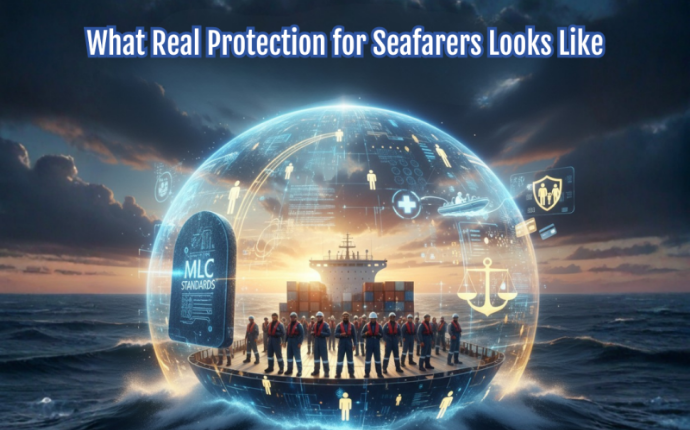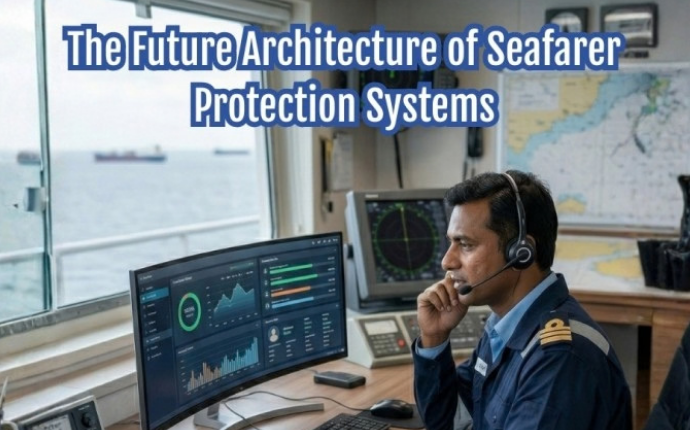
Maritime systems depend on movement across distance, but the people who sustain that movement operate within environments defined by separation, exposure and prolonged uncertainty. Seafarers work in conditions where physical risk, regulatory complexity and geographic isolation intersect continuously. Their professional environment extends beyond any single jurisdiction, often beyond immediate institutional reach and frequently beyond the rhythms of conventional employment structures. Under such circumstances, protection cannot function as an episodic safeguard. It must operate as an architecture — structured, continuous and capable of sustaining support across the full span of maritime life.
The future of seafarer protection therefore lies not in incremental adjustment of isolated welfare provisions, but in the development of integrated systems that align governance, financial assurance, administrative coordination and professional support into a coherent institutional framework. Protection must become systemic in design, anticipatory in function and adaptive in response to the evolving realities of maritime work.
Historically, protection in maritime labour developed gradually in response to visible need. Safety standards emerged from operational experience. Labour conventions established baseline protections across international employment. Compensation and repatriation frameworks addressed specific contingencies that arose within global shipping. Each development represented progress. Yet these measures often evolved as distinct mechanisms, layered sequentially rather than designed as a unified structure.
Modern maritime systems now operate at a scale and complexity that require a more integrated approach. Global workforce mobility has expanded. Technological transformation has reshaped operational conditions. Regulatory environments have grown more interconnected. The nature of professional risk has diversified beyond physical exposure to include financial vulnerability, contractual complexity and administrative uncertainty across jurisdictions. Protection systems must therefore evolve from reactive frameworks into structured architectures capable of sustaining continuity across these multiple dimensions.
India’s maritime workforce exemplifies the scale and global dispersion that make such architecture essential. Indian seafarers serve across diverse fleets, often operating under regulatory regimes that intersect domestic governance with international conventions and host-state frameworks. Ensuring that protection remains effective across these layered environments requires systems that function seamlessly across geographic and institutional boundaries.
The architecture of future protection systems must therefore be defined by coherence. Governance frameworks must align with financial assurance mechanisms so that obligations are not only defined but sustainably supported. Administrative processes must operate across jurisdictions so that protection does not depend on location. Professional support systems must extend across the full lifecycle of maritime employment, from entry into training through extended service and eventual transition beyond active sea duty.
This lifecycle perspective represents a central shift in how protection is conceived. Seafarer wellbeing cannot be understood solely in relation to moments of acute risk. It must encompass the continuity of professional life across years and decades. Medical support, financial security, contractual clarity and repatriation assurance all function most effectively when integrated into a framework that accompanies individuals throughout their maritime careers.
Globally, emerging approaches to maritime welfare increasingly reflect this systemic orientation. Protection is understood not merely as compliance with international standards, but as a structured environment that sustains professional stability under conditions of persistent uncertainty. Financial mechanisms are being designed to distribute risk more effectively. Administrative coordination is expanding across jurisdictions. Digital systems are enhancing continuity of documentation, communication and oversight.
India’s maritime governance environment continues to evolve within this broader global transformation. Alignment with international labour conventions, development of institutional coordination mechanisms and engagement with sectoral stakeholders all reflect recognition that protection must remain continuous and comprehensive. The scale of India’s maritime workforce further reinforces the need for protection systems capable of operating with consistency across global operational contexts.
The Indian Maritime Federation’s engagement across workforce, policy and industry dialogue reflects awareness that the future architecture of protection depends on institutional alignment rather than isolated intervention. Observations across the maritime ecosystem indicate that systems remain most stable where protection mechanisms function as integrated components of governance. Dialogue that strengthens coherence among regulatory frameworks, financial structures and administrative processes contributes directly to the evolution of protection architecture.
Technological transformation within maritime operations introduces new dimensions to this evolution. Digital monitoring systems, advanced navigation technologies and evolving environmental compliance requirements alter both the nature of maritime work and the forms of risk associated with it. Protection systems must adapt not only to traditional operational hazards but to emerging professional conditions shaped by technological change.
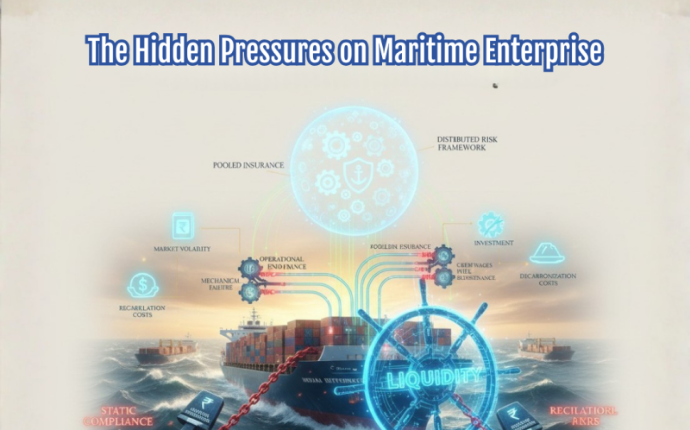
Financial architecture plays an equally significant role in shaping the future of protection. Structured assurance mechanisms, risk-pooling arrangements and insurance frameworks determine how obligations are sustained across varying operational scenarios. Protection that depends solely on individual enterprise capacity may remain vulnerable to disruption. Protection embedded within broader financial structures acquires continuity independent of isolated circumstances.
Administrative coordination across jurisdictions represents another defining feature of future protection systems. Seafarers operate within transnational environments where institutional responsibility must extend beyond territorial limits. Documentation, certification, dispute resolution and welfare provision must function through cooperative frameworks that connect domestic institutions with global maritime governance systems.
This transnational dimension transforms protection into an ongoing institutional presence rather than a geographically bounded service. The effectiveness of protection depends on the capacity of governance frameworks to remain engaged regardless of where maritime work occurs. Continuity of institutional responsibility becomes the defining characteristic of modern protection architecture.
The future architecture must also recognise the human dimension of maritime work more comprehensively. Physical safety remains essential, but professional wellbeing encompasses psychological resilience, social continuity and financial security across extended periods of service. Protection frameworks that address these broader dimensions contribute to sustained workforce participation and long-term professional stability.
India’s maritime future will depend significantly on the capacity to sustain this integrated architecture. The country’s global maritime presence is carried by a workforce whose participation extends across diverse operational environments. Ensuring that this participation remains stable requires protection systems capable of evolving alongside the conditions that shape maritime life.
Maritime history demonstrates that the stability of global shipping has always depended on the continuity of human capability. Ships and infrastructure provide physical capacity. Protection systems sustain the people who operate within that capacity. As maritime systems become more complex and interconnected, the architecture of protection becomes correspondingly more central to sectoral resilience.
Protection, when organised structurally, performs a function comparable to infrastructure. It supports continuity under conditions of uncertainty. It enables professional participation across distance and time. It sustains confidence that maritime work remains viable even in environments characterised by inherent risk. The future architecture of seafarer protection will therefore form one of the foundational pillars upon which long-term maritime stability rests.
As India continues to strengthen its maritime presence, the evolution of integrated protection systems will shape not only workforce wellbeing but the credibility and resilience of the maritime system as a whole. Protection will no longer be understood solely as a regulatory obligation. It will be recognised as a structural framework that sustains the human dimension of global maritime activity across generations.