Infrastructure is most often understood in physical terms. Ports, shipyards, logistics corridors and navigational systems form the visible framework through which maritime activity moves. These structures enable trade, support operations and connect economies across distance. They are essential because they provide the physical capacity through which maritime systems function.
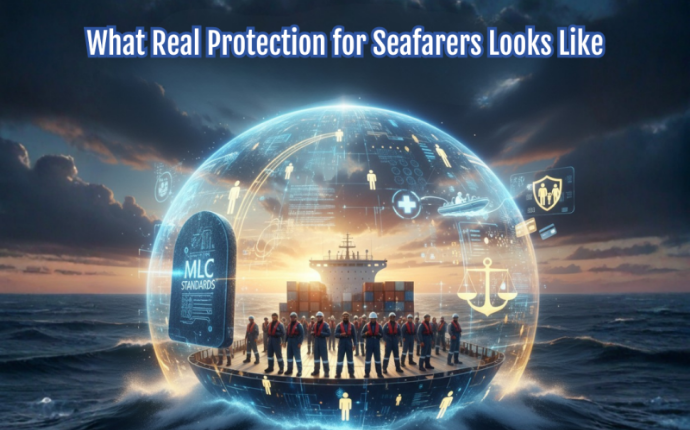
Yet maritime systems depend on another form of infrastructure that is less visible but equally foundational. This infrastructure does not move cargo or berth vessels. It sustains the people whose knowledge, skill and endurance make maritime activity possible. Workforce protection, when organised systematically and sustained consistently, functions as strategic maritime infrastructure in its own right.
To understand workforce protection as infrastructure is to recognise that maritime systems cannot operate reliably without structured frameworks that safeguard the wellbeing, continuity and professional stability of those who serve within them. Protection is not an external add-on to maritime activity. It is an enabling condition that allows maritime work to be performed across environments defined by distance, risk and prolonged separation from immediate institutional support.
Maritime labour occupies a distinctive position within the global economy. Work is performed in physically demanding and often isolated conditions. Employment occurs across jurisdictions where regulatory authority may be distributed or overlapping. Operational cycles extend for long durations away from home environments. Under such circumstances, the stability of maritime systems depends not only on technical competence but on the assurance that individuals remain supported regardless of location or circumstance.
Protection, therefore, must function continuously rather than episodically. It cannot depend solely on reactive response when specific contingencies arise. It must be embedded within governance frameworks that operate throughout the lifecycle of maritime employment. This continuity transforms protection from a remedial function into a structural one.
India’s maritime workforce exemplifies the scale and global reach that make such structural protection essential. Indian seafarers serve across international fleets, often operating within complex regulatory and operational environments far from domestic institutional presence. Ensuring that protection remains effective across such conditions requires systems capable of sustaining support across geographical and jurisdictional distance.
These systems include frameworks governing safety standards, medical support, compensation mechanisms, repatriation arrangements and employment security. Each addresses a particular dimension of professional wellbeing. Yet when viewed collectively, they form an integrated environment that allows maritime work to remain viable as a long-term professional commitment.
The strategic character of workforce protection emerges most clearly when viewed through the lens of system stability. Maritime operations depend on continuous availability of skilled professionals. Training alone does not guarantee this continuity. Individuals must be willing to enter and remain within maritime careers over extended periods. That willingness depends significantly on confidence that protection remains reliable across uncertain conditions.
Where protection is structured and dependable, professional engagement becomes sustainable. Individuals commit to long-term skill development. Experience accumulates across operational cycles. Institutional memory deepens. Workforce continuity strengthens operational resilience. The maritime system benefits from stable human capability that evolves over time.
Where protection is uncertain or inconsistent, participation may become more transient. Professional pathways may fragment. Retention of experienced personnel may decline. Operational systems must rely more heavily on continuous recruitment rather than sustained expertise. The cost of instability appears not immediately, but gradually through erosion of professional continuity.
Globally, maritime economies that sustain strong and reliable workforce participation typically maintain protection frameworks that function as integrated components of governance. These frameworks do not operate solely as safeguards in exceptional circumstances. They form part of the normal operating environment. Professionals engage with maritime work in the knowledge that institutional support remains present even when they operate far from immediate oversight.
India’s maritime governance increasingly reflects recognition of this structural dimension. Protection is not understood merely as a regulatory requirement. It is recognised as a foundational element of maritime capability. The stability of workforce participation supports the stability of the sector as a whole.
The Indian Maritime Federation’s engagement across workforce, industry and institutional domains reflects this understanding. Experience across diverse segments of the maritime ecosystem indicates that protection frameworks contribute directly to operational reliability. Dialogue that strengthens coherence between welfare provision, regulatory oversight and administrative coordination supports the development of workforce protection as enduring infrastructure.
Viewing protection as infrastructure also clarifies its relationship to investment and economic development. Maritime systems depend on long-term planning. Training institutions invest in professional formation. Enterprises depend on stable labour participation. National maritime capacity develops over extended periods. Workforce protection sustains these investments by ensuring that human capability remains continuous.
Protection frameworks also influence international perception. Maritime labour markets are global, and recruitment decisions reflect evaluation of how different systems support their professionals. Countries whose protection mechanisms remain consistent and reliable across jurisdictions are recognised as stable sources of maritime talent. Institutional credibility extends from the way professionals are supported as much as from how they are trained.
India’s role within global maritime labour markets is shaped in part by this dimension of credibility. The strength of its workforce is recognised internationally. Sustaining and strengthening protection frameworks ensures that this recognition remains durable across evolving operational environments. Protection supports reputation. Reputation supports participation.
Workforce protection also contributes to the adaptability of maritime systems. Technological innovation, regulatory change and evolving operational practices alter the nature of maritime work. Systems that provide structured protection allow professionals to adapt to these changes with confidence. Training can evolve, responsibilities can shift and operational practices can transform without undermining professional security.
The strategic value of protection becomes particularly evident during periods of disruption. Economic volatility, operational incidents or global crises test the capacity of maritime systems to maintain continuity. Protection frameworks that function as infrastructure provide stabilising support during such periods. They ensure that individuals remain secure even when external conditions become uncertain. Stability of workforce participation supports stability of operations.
Maritime systems have always depended on human endurance under conditions that demand resilience. Historically, protection was often localised and inconsistent. Modern maritime governance reflects recognition that sustained global operations require sustained global protection. Institutional frameworks now extend support across distance and duration, reflecting the structural importance of human capability.
As India continues to expand its maritime presence, workforce protection will remain central to sustaining long-term sectoral strength. Infrastructure development, fleet expansion and policy evolution all depend on the continuous presence of skilled professionals. Protection ensures that this presence remains stable across time.
The concept of infrastructure traditionally emphasises physical capacity. Expanding this concept to include workforce protection recognises that maritime systems function through both material and human structures. Physical infrastructure enables movement. Protective infrastructure sustains participation. Together, they form the foundation upon which maritime activity rests.
In the long evolution of maritime economies, those that have achieved durable stability have often done so by recognising that human capability requires structured support equal in importance to physical development. Workforce protection, when embedded within governance, becomes a permanent feature of maritime architecture rather than a temporary response to individual need.
As India’s maritime system continues to mature, protection will increasingly be understood not only as a regulatory obligation but as strategic infrastructure — an enduring framework that supports the continuity, resilience and credibility of maritime activity across generations.