Maritime enterprise is often understood through its visible expressions. Vessels move across trade routes, cargo flows through ports, crews operate within demanding environments, and schedules connect markets separated by oceans. Yet beneath this movement lies a quieter dimension that shapes the sector just as profoundly. Every maritime operation rests upon a financial structure that must remain stable even as the physical environment remains uncertain. Capital is not merely a resource within shipping. It is the condition that makes sustained participation possible.
The financial architecture of maritime activity has always been distinctive. Unlike sectors where capital can be deployed and withdrawn with relative ease, shipping requires long-term commitment. Vessels represent substantial investment that must be maintained regardless of short-term market fluctuations. Compliance obligations require financial assurance that remains in place continuously. Operational costs must be sustained across periods when revenue is variable. The maritime enterprise therefore exists within a financial rhythm defined by endurance rather than immediacy. Liquidity, stability and flexibility must coexist if operations are to remain resilient.
As regulatory frameworks have evolved alongside the growth of maritime activity, financial assurance mechanisms have become integral to the structure of compliance. These mechanisms serve important purposes. They demonstrate responsibility, provide security against potential obligations and reinforce institutional confidence that operators possess the capacity to meet their commitments. In sectors where safety, welfare and international credibility are paramount, such assurance is not optional. It is foundational to trust.
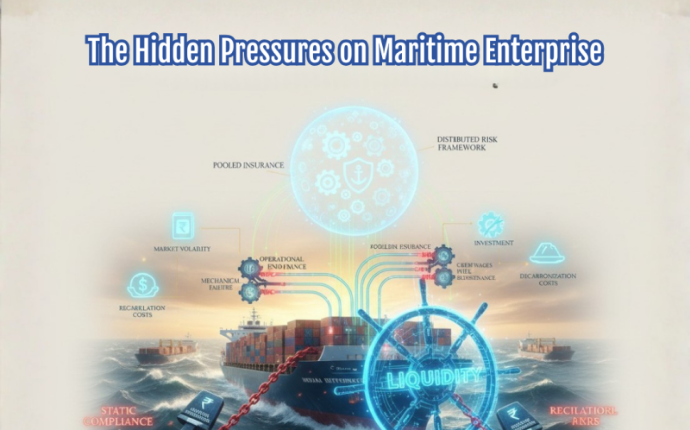
Yet the presence of financial assurance mechanisms introduces a dynamic that is often less visible but deeply influential. Capital that is committed to static forms of assurance is capital that cannot simultaneously serve other operational functions. When financial resources are held in reserve to satisfy compliance requirements, their availability for investment, adaptation and response becomes correspondingly limited. This does not represent a flaw in regulatory design. It reflects the inherent tension between demonstrating financial responsibility and maintaining operational flexibility.
For maritime enterprises, particularly those operating within volatile commercial environments, liquidity functions as a form of resilience. It allows operators to respond to fluctuations in freight markets, absorb unexpected costs, maintain vessel readiness and navigate periods of reduced revenue without compromising continuity. Liquidity is the financial equivalent of manoeuvrability at sea. It provides the capacity to adjust course without destabilising the vessel itself. When liquidity is constrained, the margin for adaptation narrows. Operational decisions become more cautious, investment horizons shorten and exposure to external shocks increases.
The interaction between liquidity and compliance therefore becomes a central economic consideration in maritime operations. Compliance frameworks establish the conditions under which participation in the sector is authorised and sustained. Liquidity determines how effectively enterprises can function within those conditions over time. When the financial commitments required to demonstrate compliance are proportionate to operational scale, this relationship remains balanced. When those commitments grow in magnitude or duration relative to available capital, the balance becomes more complex.
India’s maritime sector has experienced steady expansion in both scale and sophistication. This expansion has brought with it heightened regulatory expectations, increased international engagement and greater institutional oversight. Each of these developments contributes to strengthening credibility and ensuring alignment with global standards. At the same time, they also shape the financial environment within which maritime enterprises operate. The cost of compliance is not measured solely in administrative effort. It is also measured in the capital that must be continuously committed to sustaining regulatory assurance.
For large organisations with diversified financial structures, absorbing these commitments may represent a manageable allocation of resources. For smaller and mid-scale enterprises, the same commitments may constitute a significant proportion of available capital. The impact is not merely financial. It influences the strategic posture of the enterprise itself. Decisions regarding expansion, modernisation and operational deployment are shaped by the degree of liquidity that remains after compliance obligations have been satisfied. Where financial flexibility is limited, growth may proceed more cautiously even when opportunity exists.
This dynamic is not unique to India. Maritime sectors around the world have long navigated the balance between financial assurance and operational flexibility. What distinguishes contemporary conditions is the scale at which these considerations now operate. As maritime activity becomes more interconnected and responsive to global market dynamics, the financial environment within which operators function must accommodate both stability and adaptability. Assurance mechanisms that remain static over extended periods interact with markets that are inherently dynamic. The resulting tension is structural rather than situational.
Globally, this tension has prompted increasing reflection on how compliance-related financial commitments can coexist with the need for liquidity that supports operational resilience. In some contexts, institutions have explored arrangements that transform static assurance into structured risk-sharing, allowing financial responsibility to remain fully intact while reducing the concentration of capital within immobilised instruments. Such approaches recognise that financial strength is expressed not only through the capacity to secure obligations but also through the capacity to sustain activity under changing conditions.
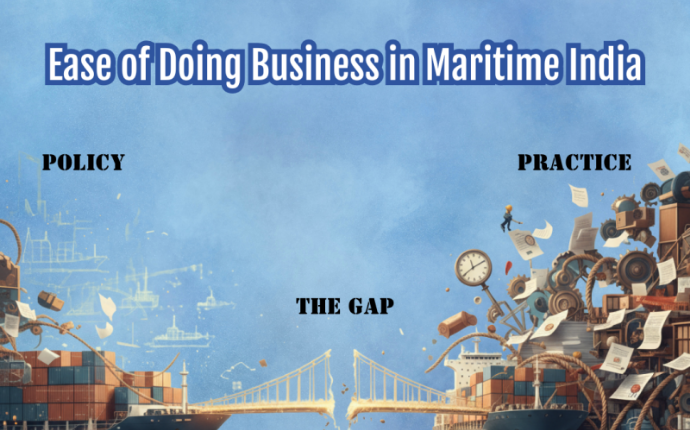
Within India’s maritime ecosystem, the question of financial balance carries particular significance because the sector’s continued growth depends on the vitality of enterprises across different scales of operation. The presence of diverse participants contributes to resilience, innovation and competitive dynamism. Ensuring that the financial architecture of compliance supports rather than constrains this diversity requires ongoing attention to how capital flows through the system. The objective is not to diminish regulatory assurance but to ensure that the mechanisms through which assurance is demonstrated remain proportionate to the economic realities of maritime enterprise.
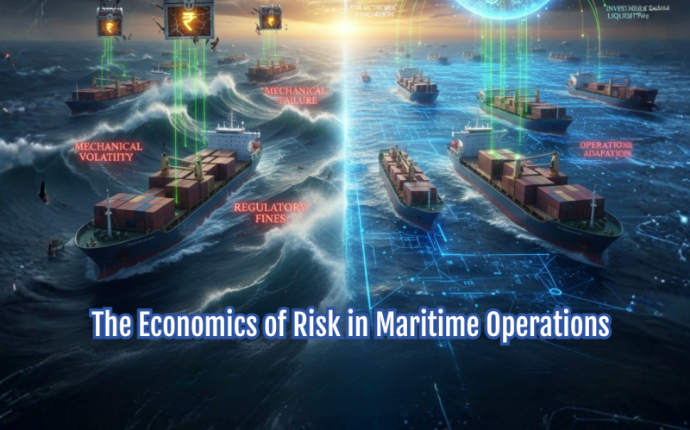
The relationship between liquidity and compliance also influences how risk is experienced across the sector. When capital is heavily committed to static assurance, the ability of enterprises to absorb unexpected operational disruptions may become more limited. Conversely, when liquidity remains sufficient to respond to changing conditions, the system as a whole becomes more stable because individual actors retain the capacity to manage uncertainty without immediate institutional intervention. Financial flexibility thus contributes not only to enterprise resilience but to systemic resilience.
Within maritime operations, the concept of resilience extends beyond financial metrics alone. It encompasses the ability of enterprises to maintain continuity in service, uphold safety standards and support the welfare of their workforce even when conditions become challenging. Liquidity supports each of these outcomes by enabling timely response. It allows maintenance to proceed without delay, contractual obligations to be honoured consistently and welfare commitments to be fulfilled without interruption. The financial structure of compliance therefore interacts directly with the operational realities of maritime life.
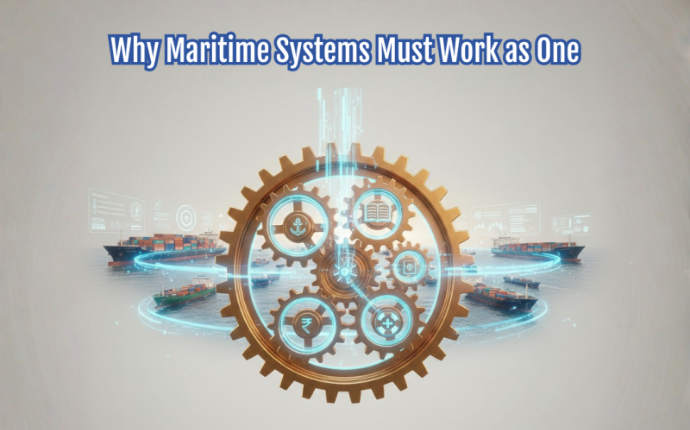
The Indian Maritime Federation observes these dynamics through its engagement with industry participants, regulatory institutions and financial stakeholders across the sector. Experience indicates that the strength of maritime enterprise depends not solely on the presence of financial assurance but on the balance between assurance and adaptability. Supporting this balance involves recognising that capital performs multiple functions simultaneously. It secures responsibility, sustains operations and enables growth. When these functions remain aligned, maritime activity can expand with stability and confidence.
As India’s maritime sector continues to evolve within an increasingly complex global environment, the relationship between liquidity, capital and compliance will remain central to its trajectory. The structures that govern financial assurance must continue to reflect the dual objective of maintaining credibility while preserving operational vitality. Achieving this balance requires continuous reflection on how financial commitments interact with the economic realities of shipping and the strategic aspirations of national maritime development.
In the broader arc of maritime history, financial architecture has always adapted to the changing scale of enterprise. From the earliest forms of shared risk in merchant ventures to modern systems of insurance and regulatory assurance, institutions have sought ways to align financial responsibility with operational necessity. The present moment represents another stage in that ongoing evolution. As maritime activity expands in reach and complexity, the hidden pressures within financial structures become more visible, inviting thoughtful consideration of how capital can continue to support both compliance and continuity.
Maritime enterprise has never been defined solely by movement across water. It has always depended on the quiet stability of the financial foundations beneath that movement. Where liquidity, capital and compliance exist in equilibrium, operations proceed with confidence. Where that equilibrium is strained, even steady waters can carry unseen pressures. The continued strength of India’s maritime sector will rest in part on how carefully this balance is maintained as growth continues to unfold.